Where the effect lands and where it does not
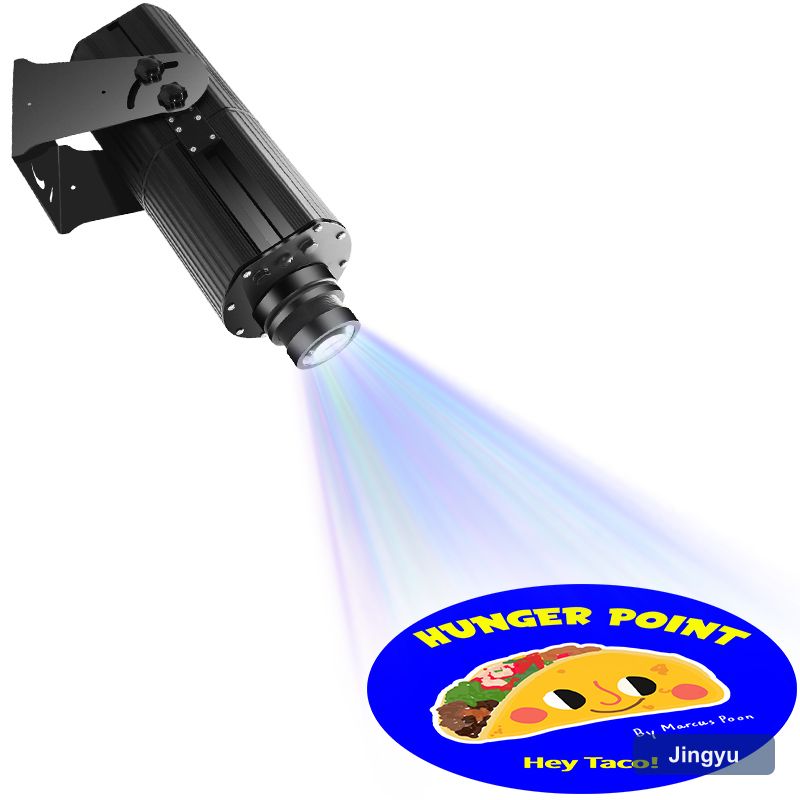
The applications that work share one property: the surface is controlled. Where an outdoor advertising logo projector succeeds — a roadside wall, a car park boundary — somebody has thought about what is already falling on that wall. Where it fails, the unit is fighting daylight or a glossy, patterned surface it was never going to win against.
roadside wall: the straightforward install
A roadside wall install is the reference case: controlled surface, predictable light, fixed message. an outdoor advertising logo projector in this setting usually runs at the lower end of its output range, which extends LED life and keeps the housing cool — the two things that determine whether it is still running in five years.
Application two — car park boundary
car park boundary is harder, because the outdoor advertising logo projector is competing with lighting somebody else controls. The fix is rarely more power — it is choosing a surface, an angle, and an hour where the projection has a chance. Move the image off the most lit part of the wall, project onto a matte surface rather than a glossy one, and the same unit performs completely differently.
Application three — industrial estate entrance
industrial estate entrance is the demanding case, and where an outdoor advertising logo projector either proves itself or gets returned. Longer throws, more ambient light, and usually a surface nobody chose for the purpose. These installs need the top of the output range, careful aiming, and often a compromise on image size — a smaller, brighter logo beats a large, washed-out one.
Settings that change with the venue
Configuration follows the venue more than the product. The same outdoor advertising logo projector wants a narrow beam and high output on a long throw, a wide beam and modest output for a floor wash, and a locked focus anywhere it might be bumped. Decide these from the site, then order the lens to match.
| Application | Recommended output | Notes |
|---|---|---|
| roadside wall | 100 W class | Controlled surface, short throw |
| car park boundary | 100–400 W | Competing with existing lighting |
| industrial estate entrance | 400 W and up | Reduce image size before adding power |
Three site questions
Three checks decide most applications: ambient light at the hour of use, the angle between the beam and the surface, and whether the image lands on something matte. an outdoor advertising logo projector that fails any of these will not be rescued by a bigger lamp.