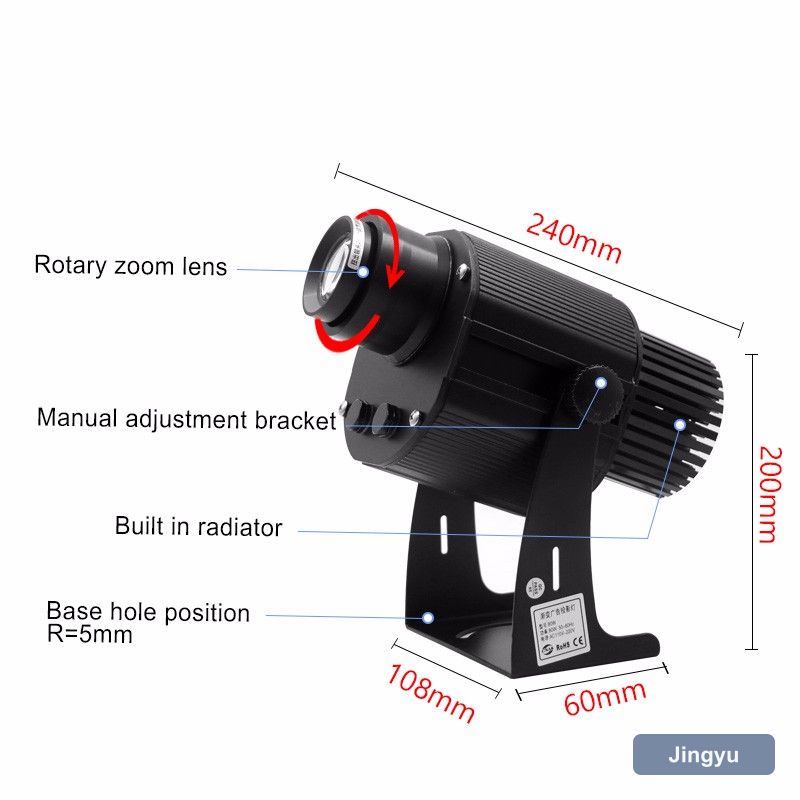
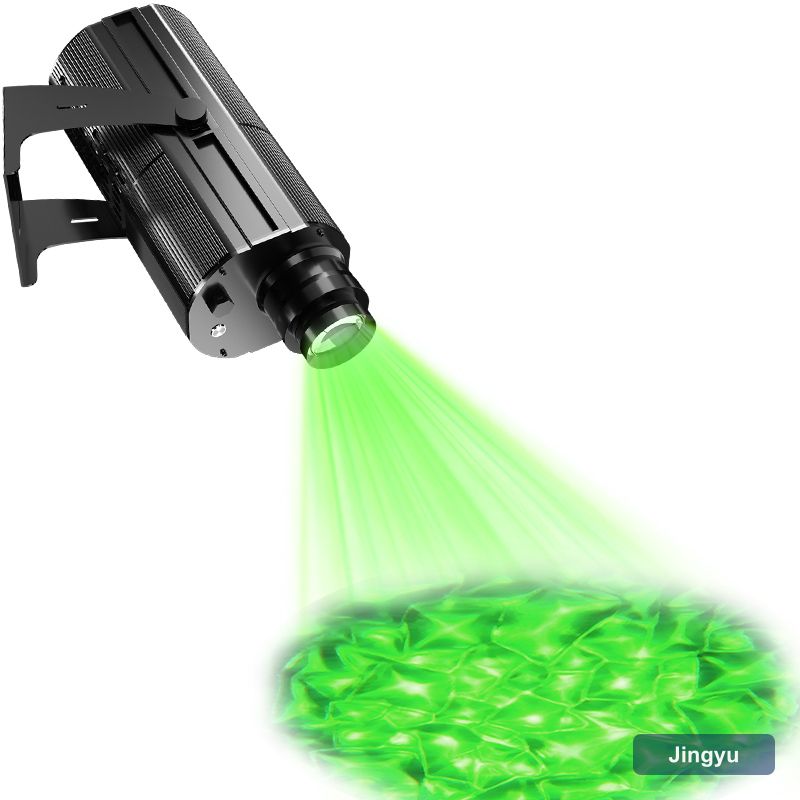
Diagnose in the order light travels
Work backwards from the wall. A high power gobo projector that looks wrong is usually telling you something specific: soft edges mean focus or angle, a dim image means ambient light or dirty optics, a colour cast means the filter or the gobo. Each symptom has three or four causes and only one of them is an expensive one.
- What the surface looks like and how it is lit
- Whether the image is uniformly soft or soft at one edge
- When the fault started — overnight or gradually
- Whether anything on site changed at the same time
Blur: focus, surface and lens
Refocus at the working hour, on the actual surface, and check the corners as well as the centre. If the corners never sharpen, the high power gobo projector is off-axis rather than out of focus — move the bracket rather than the lens. If focus drifts again after a week, look for vibration or a focus mechanism without a lock.
- Refocus at the working hour on the actual surface
- Check the corners — soft corners mean an angled mount
- Confirm the surface is flat
- Inspect the lens and gobo for contamination
Dim: ambient light, output and dirty optics
Check the easy things in order: lens cleanliness, ambient light at the working hour, image size. Halving the image area doubles the brightness at the wall, which is free. Only after those should you consider a higher output model — and if you do, note that going from 150 W to 600 W is a visible but not dramatic change.
- Clean the outer window and lens
- Measure ambient light at the working hour
- Reduce the image width and re-check contrast
- Run a full duty cycle and log the housing temperature
Colour is wrong or the gobo looks damaged
If the whole image has shifted, suspect the filter; if only part has, suspect the gobo. Dichroic coatings are stable for years, but dyed glass browns under heat, and a high power gobo projector running at the top of its range will age a cheap filter in a single season. Photograph the image against a white reference and compare it with the install photo.
It cuts out, hums or trips
Check the supply before the fixture. A high power gobo projector on a long cable run, a shared circuit, or a supply with its protection sized for something else will misbehave in ways that look like product failure. Measure at the unit under load, not at the distribution board.
When to stop and call the manufacturer
Call the manufacturer when the fault survives the sequence: optics cleaned, focus reset at the working hour, ambient light measured, and supply checked under load. Have the model, the install date, the throw distance and a photo of the image ready — that is enough for a supplier to tell you whether it is a warranty matter or a site issue.