What's happening
Goboservice highlights its dichroic filters for lighting engineering, made from borosilicate glass with a dielectric (silicon oxide / titanium) coating of tens-of-nanometres per layer. Because unwanted wavelengths are reflected rather than absorbed, the filters do not overheat and suit high-temperature projector and moving-head applications; they are used to colour light and correct colour temperature. The Italian-made gobos and filters are also applied to scenography and lighting engineering.
Why it matters for buyers
For a retailer, venue or signage buyer, the practical effect is simple: the unit that reads on your wall at your ambient light, with your artwork, beats the one with the bigger number on the box. Specification order — distance, image size, ambient, then brightness — decides the result.
It also changes lead-time risk. Custom gobos and certified outdoor builds need briefing before the date is fixed; the projector is rarely the long pole, the artwork and certification are.
The technical angle
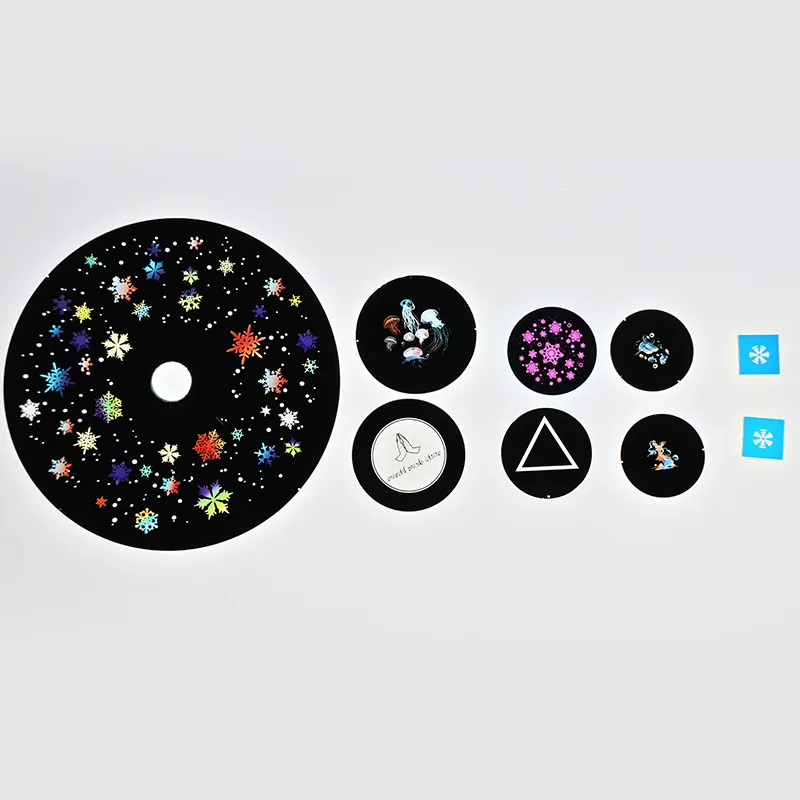
Glass gobos outlast metal and resist the hot spot that burns a coated steel pattern within a season. For full-colour work, dichroic colour filters are what actually survive the lamp — dyed glass fades, dichroic coatings reflect the unwanted wavelengths and stay stable.
What to specify
Before you request a quote, lock these down:
- Gobo material: glass for longevity and colour, metal for cheap short runs
- Throw distance from bracket to surface, measured on site — not estimated
- MOQ and dispatch window before the event date
- Ingress rating if it lives outdoors or gets washed down