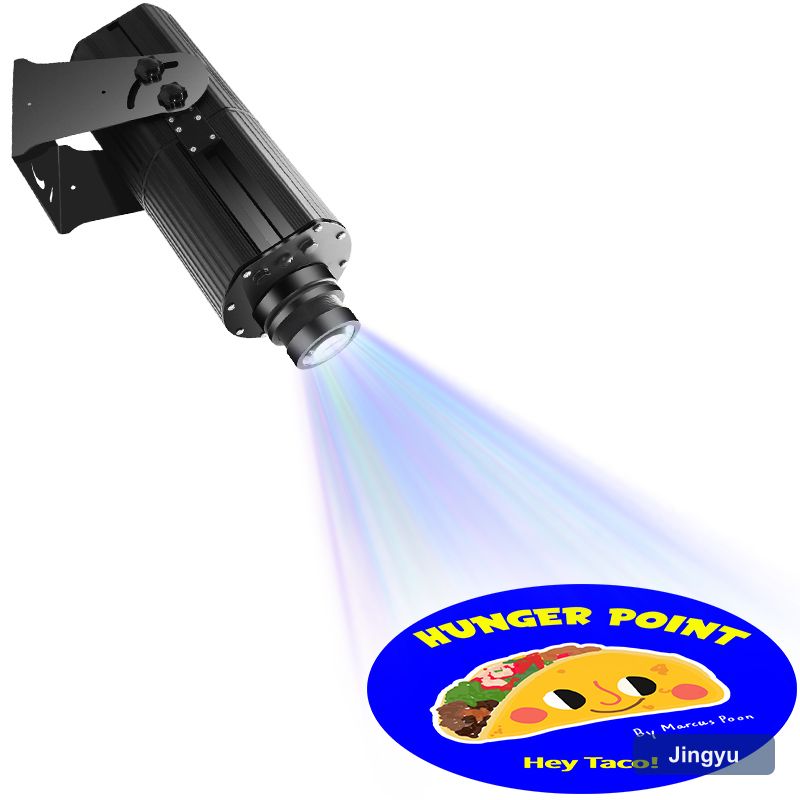
Survey before you drill
A waterproof gobo projector install is mostly survey work. Walk the site at the hour the projection will run, because the ambient light, the position of vehicles, and even the position of a display stand all change what works. Take a photo, measure the throw, and mark the cable route before ordering anything.
- Power within reach of the mounting point
- What the target surface is made of and how it is lit
- Whether the mounting point carries the weight
- Access for future servicing — ladder or powered platform
Mounting height and bracket choice
Choose the bracket before the fixture. A waterproof gobo projector needs to hold its aim through thermal cycles and, outdoors, through wind loading; a lightweight bracket that drifts a degree will put the image off-target within a month. Use a bracket rated above the fixture weight, and if the install is exposed, check the fixings are stainless.
- Bracket rated above the fixture weight
- Stainless fixings for exposed positions
- Beam as close to perpendicular as the site allows
- Position reachable without powered access
Aiming, zooming and focusing
Do the final focus at the hour the unit will actually run, with the surface at its normal temperature. A waterproof gobo projector focused on a cold wall at 9am can drift slightly as the housing warms, and on long throws that drift is the difference between crisp and acceptable.
- Confirm the geometry and tighten the bracket
- Zoom until the image fills the intended area
- Focus on the centre of the image
- Check the corners — soft corners mean an angled mount
The part that fails inspection, not the optics
Fit the cable gland the right way up and leave a drip loop. Those two details prevent most of the water ingress calls on outdoor waterproof gobo projector installs. Then confirm the supply is switched and labelled, so the site team can isolate the unit without hunting through a distribution board.
- Fixed, switched, protected supply
- Cable gland rated for the environment, fitted with a drip loop
- Run out of reach and out of the cleaning route
- Connection point accessible without dismantling the unit
Commissioning checks
Commission in three checks: image sharpness at the corners, contrast against the surface at the working hour, and a full duty cycle run without thermal cut-out. That last one matters for IP67 units in enclosed spaces, where a waterproof gobo projector can pass every optical test and still trip after four hours in a hot ceiling void.
- Image sharpness at the centre and all four corners
- Contrast against the surface at the working hour
- Full duty cycle run without thermal cut-out
- Housing temperature after an hour at full output
What the site team needs on paper
The handover note should include the artwork file reference and the supplier's reorder code. Custom gobos are the one part of a waterproof gobo projector install that cannot be improvised on site, and re-cutting from the original file is far cheaper than redrawing it.
- Throw distance and image width as installed
- Gobo reference and artwork file name
- Zoom and focus settings
- Supplier contact for re-cutting artwork