Start with the throw distance
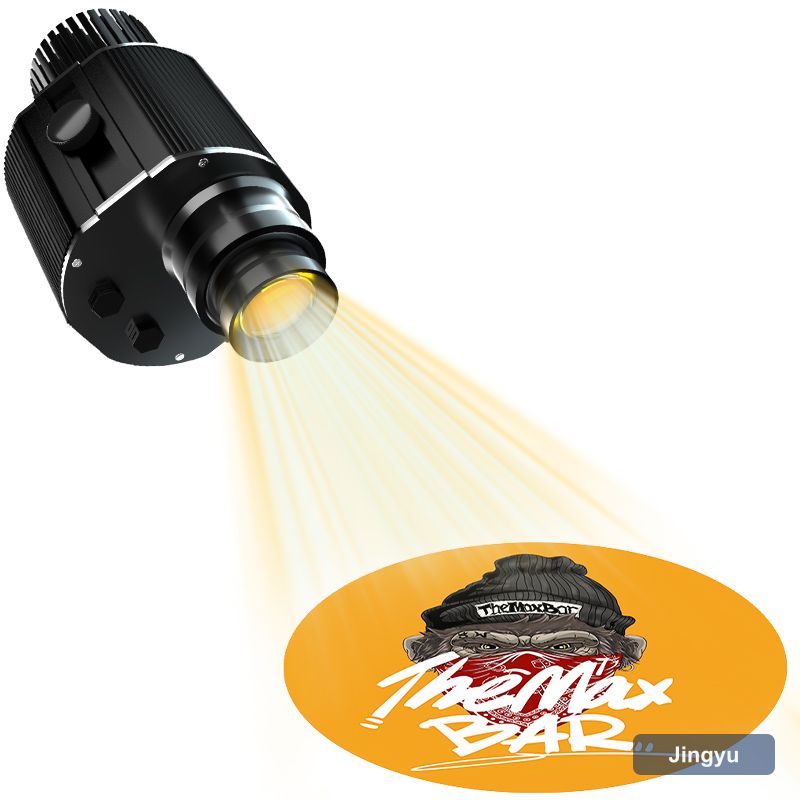
Every outdoor advertising logo projector decision starts from one measurement that most buyers skip: the distance between where the unit can be mounted and the surface it has to cover. Once you have that figure, the power bracket narrows from everything on the market to a handful of models, and the lens choice follows from it. Work it out with a tape, not from a floor plan, because ceiling voids, signage and light fittings move the real mounting point by a metre or more.
- Distance from the realistic mounting point to the centre of the target surface
- Image width you actually need, measured on the wall
- Whether the surface is flat, matte and square to the beam
- Any obstacle in the beam path — signage, foliage, display stands
Match output to the ambient light
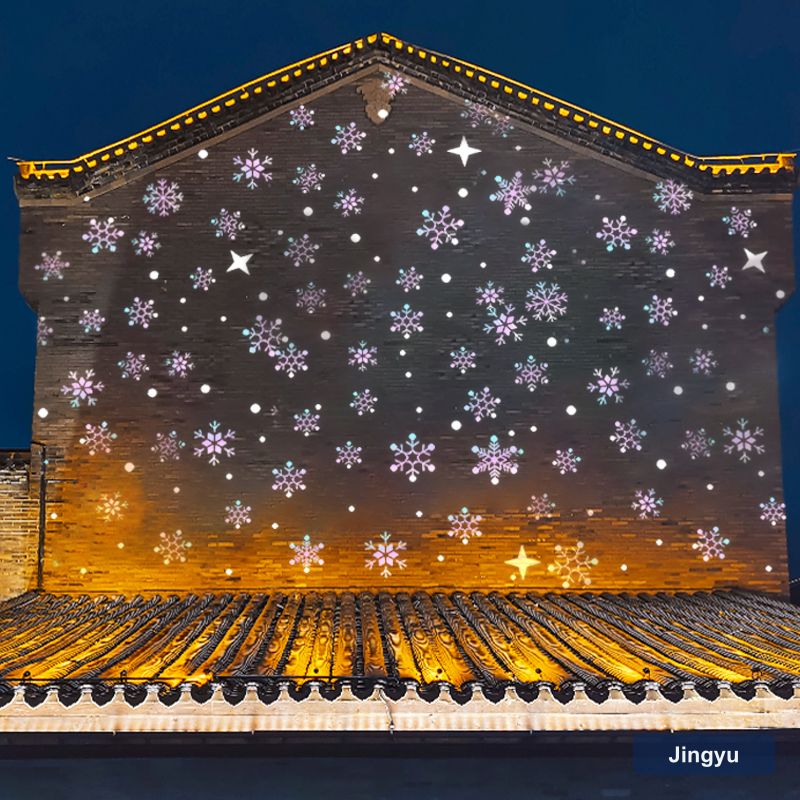
Output is not a property of the lamp, it is a relationship between the lamp and the room. An indoor corridor sitting at 300 lux will swallow a 30 W image completely, while the same unit reads clearly in a 50 lux courtyard at dusk. Before you size an outdoor advertising logo projector, find out how bright the target surface already is at the hour it will be used — that single measurement decides whether you need 100 W or 400 W.
The optics decide what you can actually adjust
Zoom and focus are the two adjustments you will use ten times and the ones cheap units make hardest. A zoom range lets one outdoor advertising logo projector cover several mounting positions, which matters when the final bracket location is decided on site rather than on paper. Look for a lens that holds focus across the zoom travel, because a unit that has to be re-focused every time you zoom is a unit that will be left slightly out of focus.
Gobo material: glass or metal
One practical test: look at the thinnest stroke in the design at the size it will be projected. If it is under a couple of millimetres at the wall, a cut metal stencil will not hold it and a glass gobo is required. That single check prevents the most common outdoor advertising logo projector disappointment — a logo that looks perfect in the proof and falls apart in light.
Where it lives matters as much as what it does
Two things wear out before the electronics do: the gasket and the cable gland. Specify IP67 for an outdoor advertising logo projector going outdoors, but also ask about the finish on the bracket and whether the gland is included in the rating. Salt air near an industrial estate entrance will find the cheapest component in the assembly within two seasons.
- Is the position exposed to driving rain or only wind-blown moisture
- Whether the cable gland is rated with the housing
- UV exposure on painted finishes and plastic parts
- Salt or pollutant load in the air
The five lines that get an accurate quote
Send five things with your enquiry and you will get a quote back the same day instead of a week of questions: the throw distance, the image width you need, a description of the surface, the ambient light at the hour of use, and the artwork file. With those, a supplier can pick the outdoor advertising logo projector model and lens in one pass. Without them, everyone guesses.
- Throw distance and mounting height
- Required image width
- Surface description and colour
- Ambient light at the hour of use
- Artwork file, vector if available