What this fixture is good at
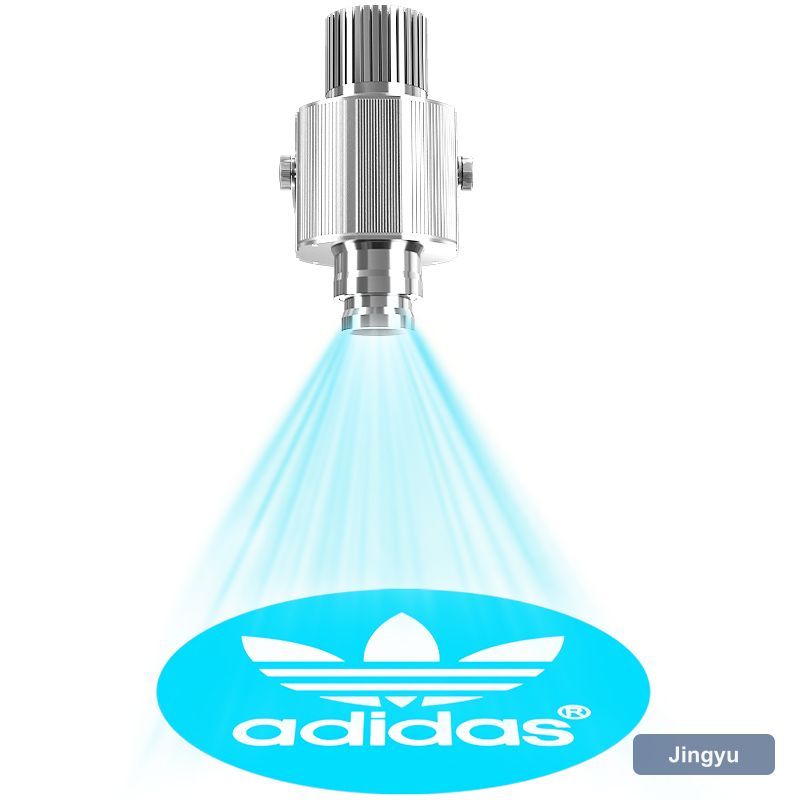
Most buyers ask what a gobo projector can do. The better question is what it does better than the alternatives: a printed sign, a neon, a screen. The answer is usually speed and reversibility — an image that can be changed in an afternoon by swapping a piece of glass, with no permit and no waste.
retail storefront: the straightforward install
In a retail storefront the gobo projector is doing straightforward work: a fixed mark, on a known surface, at a predictable hour. These are the installs that go right first time. Size the output for the ambient light at that hour, pick a glass gobo that holds the artwork, and the result is stable for years with a twice-yearly clean.
hotel lobby: lighting against competition
In a hotel lobby the competition is ambient light, and brute force is the expensive answer. Before moving from 30 W to 300 W, try relocation: a darker corner of the same wall, a surface angled away from the main fittings, or a slightly smaller image. Halving the image area doubles the brightness for free.
event venue: the demanding case
The event venue install is where the survey earns its money. Throw distances at the top of the 5–40 m range, uncontrolled ambient light, and access that may need a cherry picker all need settling before the gobo projector is specified. Most disappointing results trace back to one of these being assumed rather than measured.
Recommended configuration by application
Configuration follows the venue more than the product. The same gobo projector wants a narrow beam and high output on a long throw, a wide beam and modest output for a floor wash, and a locked focus anywhere it might be bumped. Decide these from the site, then order the lens to match.
What to check before committing
Three checks decide most applications: ambient light at the hour of use, the angle between the beam and the surface, and whether the image lands on something matte. A gobo projector that fails any of these will not be rescued by a bigger lamp.