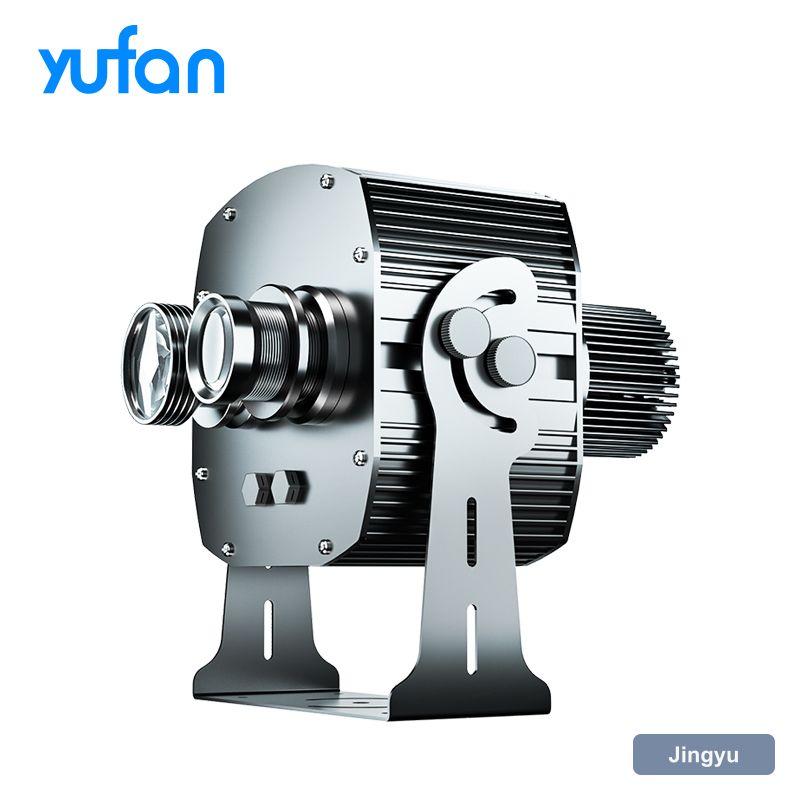
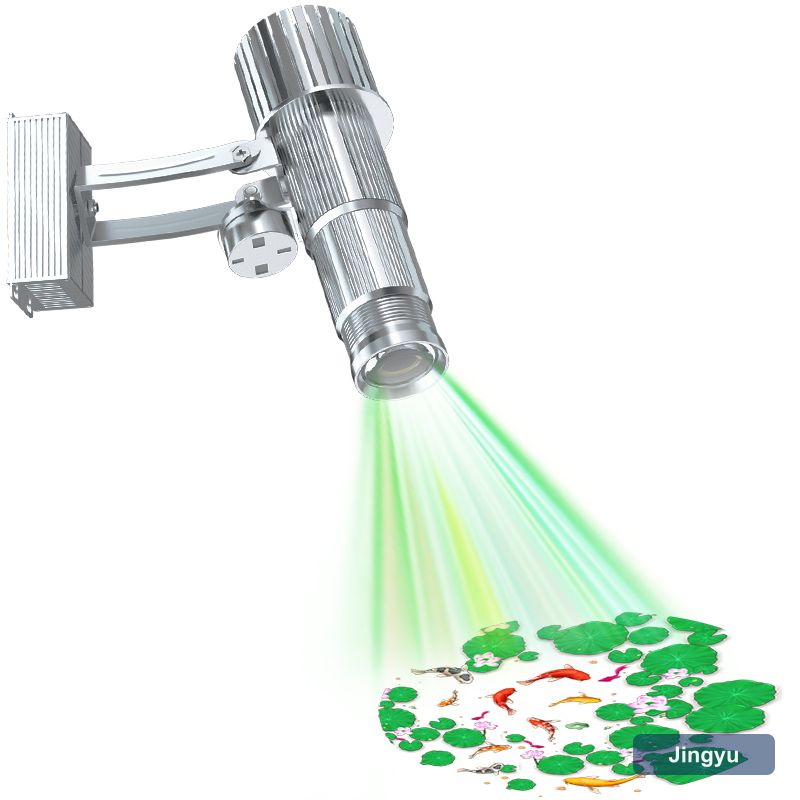
Start from the wall and work backwards
A datasheet is written to be read in the order the product was designed, which is rarely the order you need it. Read a welcome sign gobo projector sheet backwards: start from the image you want on the wall, then the distance, then the optics, then the light source. The headline wattage is the last thing to look at and the first thing most people compare.
Output numbers, ranked by how much they lie
Wattage tells you the running cost, not the result. Two welcome sign gobo projector models at the same wattage can differ by 30% at the wall because of lens efficiency and LED binning. What you actually care about is contrast: the image needs to be meaningfully brighter than the surface it lands on, and that is a lux comparison, not a lumen one.
| Figure | What it measures | How much to trust it |
|---|---|---|
| Lumens | Total light leaving the lamp | Rough sorting tool — ignores lens and gobo losses |
| Lux at the wall | Light arriving on the surface | The number that matters, rarely quoted |
| Watts | Power drawn from the supply | Tells you running cost, not brightness |
The two numbers that must be quoted together
Check whether the quoted throw is to a white wall in a dark room, because that is where the number comes from. On a welcome sign gobo projector intended for a lobby floor, the realistic working distance is usually shorter than the maximum on the sheet, since contrast — not reach — is what fails first.
| Throw | Typical image width | Practical note |
|---|---|---|
| Short, around 3 m | 0.5 – 1.5 m | Bright and easy — most indoor work |
| Mid, around 12 m | 1.5 – 3 m | Where lens quality starts to matter |
| Long, beyond 12 m | 3 m and up | Contrast fails before reach does |
The optical spec most sheets leave out
Two numbers govern the image: gobo image area and the resolution the lens can carry. Glass gobos can be engraved far finer than any welcome sign gobo projector lens in this class will resolve, so the practical limit is optical. That is worth knowing before you pay for engraving detail nobody will see from 10 m away.
IP rating and electrical data
IP44 is the number to check for anything outdoors, but read what it covers. The first digit is solid ingress, the second is liquid. IP44 on a welcome sign gobo projector means dust-tight and protected against water jets, and it says nothing about the bracket, the gland or the connector, which are the parts that actually fail. Ask whether the rating covers the whole assembly or just the housing.
What a good supplier answers without hesitating
Four questions separate a supplier who knows the product from one reading a sheet. What is the image width at my throw distance? What is the gobo image area? Is the IP44 rating for the housing alone or the whole assembly? And what is the lead time on a replacement gobo? A good supplier answers all four in one reply.