Where the effect lands and where it does not
The applications that work share one property: the surface is controlled. Where a waterproof gobo projector succeeds — an exposed wall, an entrance canopy — somebody has thought about what is already falling on that wall. Where it fails, the unit is fighting daylight or a glossy, patterned surface it was never going to win against.
exposed wall: the straightforward install
exposed wall is the easy case for a waterproof gobo projector and the one to learn on. The surface is usually matte and light-coloured, the ambient light is known, and the viewing distance is short enough that 30 W is plenty. Get the throw right, keep the beam square to the wall, and there is very little to go wrong.
Application two — entrance canopy
The entrance canopy case rewards site work over specification. Two identical waterproof gobo projector units in the same venue can look entirely different depending on which wall they are aimed at. Walk the space at the working hour, find the surface with the lowest existing illumination, and let that decide the mounting point.
Application three — poolside
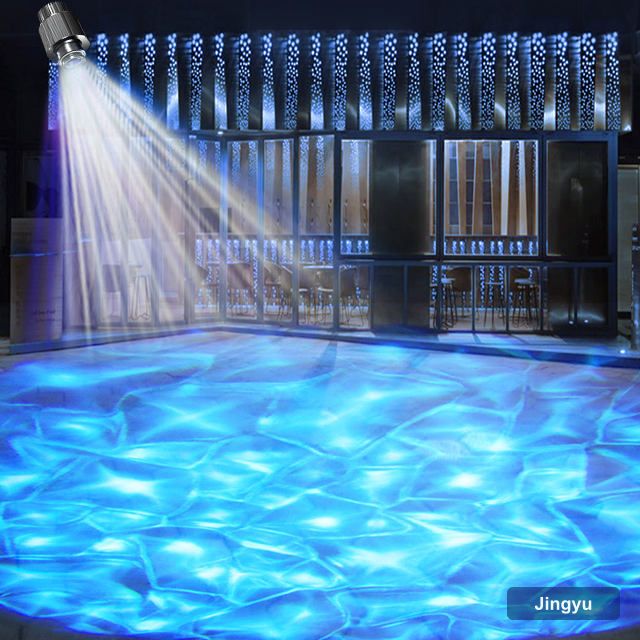
poolside is the demanding case, and where a waterproof gobo projector either proves itself or gets returned. Longer throws, more ambient light, and usually a surface nobody chose for the purpose. These installs need the top of the output range, careful aiming, and often a compromise on image size — a smaller, brighter logo beats a large, washed-out one.
Settings that change with the venue
Match the configuration to the surface: matte and light-coloured surfaces give the most back, glossy or dark ones eat the image. On difficult surfaces, reduce the image size before increasing the power — it is cheaper and it works.
| Application | Recommended output | Notes |
|---|---|---|
| exposed wall | 30 W class | Controlled surface, short throw |
| entrance canopy | 30–250 W | Competing with existing lighting |
| poolside | 250 W and up | Reduce image size before adding power |
Three site questions
Three checks decide most applications: ambient light at the hour of use, the angle between the beam and the surface, and whether the image lands on something matte. A waterproof gobo projector that fails any of these will not be rescued by a bigger lamp.