Start from the wall and work backwards
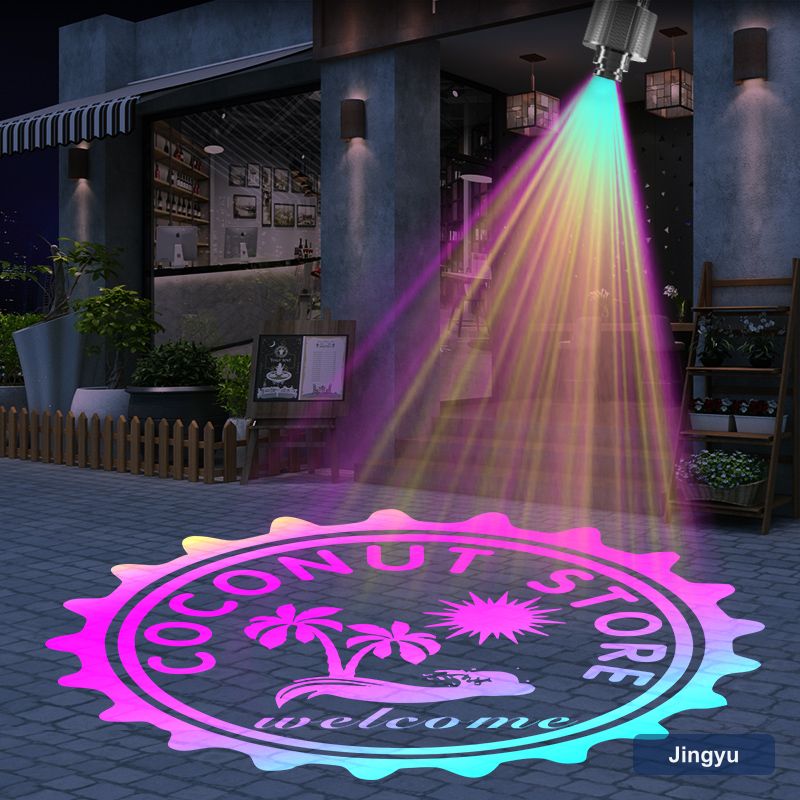
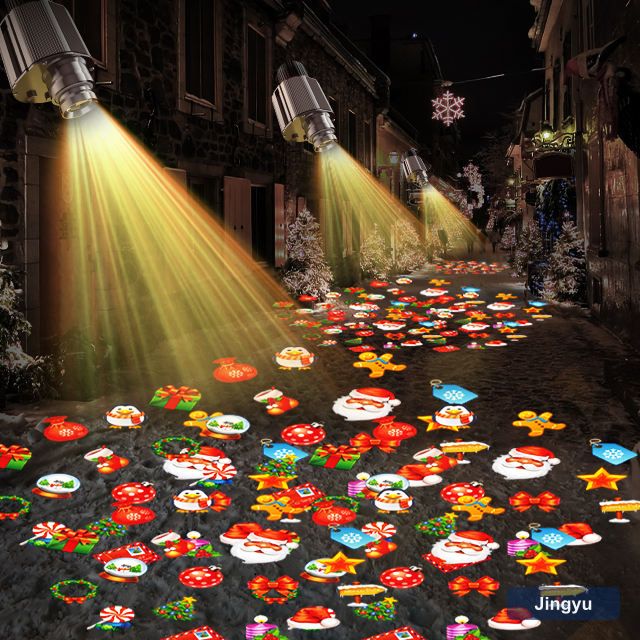
A datasheet is written to be read in the order the product was designed, which is rarely the order you need it. Read a restaurant logo projector sheet backwards: start from the image you want on the wall, then the distance, then the optics, then the light source. The headline wattage is the last thing to look at and the first thing most people compare.
Lumens, watts and what reaches the wall
Three output figures get mixed up constantly: lumens describe what the lamp produces, lux describes what arrives on the surface, and watts describe what you pay for. A restaurant logo projector drawing 20–80 W might deliver 3,000 lumens, but the lux at the wall depends entirely on how wide you spread it. The same lamp projecting a 1 m image is nine times brighter than the same lamp projecting a 3 m image.
| Figure | What it measures | How much to trust it |
|---|---|---|
| Lumens | Total light leaving the lamp | Rough sorting tool — ignores lens and gobo losses |
| Lux at the wall | Light arriving on the surface | The number that matters, rarely quoted |
| Watts | Power drawn from the supply | Tells you running cost, not brightness |
The two numbers that must be quoted together
The useful specification is the throw ratio, or failing that a distance-to-image-width table. On a typical restaurant logo projector covering 2–10 m, the zoom lens might take the image from roughly 0.8 m wide at the near end to 3 m at the far end. Once you know the width you need, the throw tells you where the bracket goes — not the other way round.
The optical spec most sheets leave out
Two numbers govern the image: gobo image area and the resolution the lens can carry. Glass gobos can be engraved far finer than any restaurant logo projector lens in this class will resolve, so the practical limit is optical. That is worth knowing before you pay for engraving detail nobody will see from 10 m away.
The compliance block
Ratings age. A restaurant logo projector that left the factory rated IP44 can lose that rating the first time somebody opens it to change a gobo and reseats the gasket badly. Look for a design where routine access does not mean breaking the environmental seal, or accept that the rating applies to the unit as delivered, not as maintained.
Questions worth asking the supplier
Four questions separate a supplier who knows the product from one reading a sheet. What is the image width at my throw distance? What is the gobo image area? Is the IP44 rating for the housing alone or the whole assembly? And what is the lead time on a replacement gobo? A good supplier answers all four in one reply.