What this fixture is good at
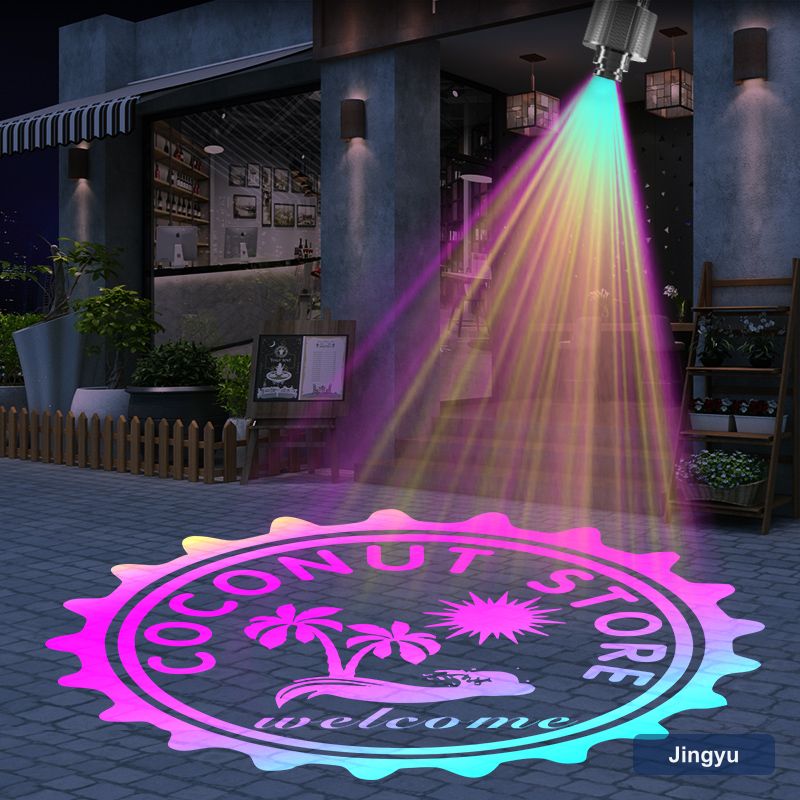
A restaurant logo projector is not decoration, it is a way of putting a message on a surface that already exists. It earns its keep where a permanent sign is too expensive, too slow to permit, or simply not allowed — and it struggles where the ambient light is stronger than the projector can beat. Knowing which is which before you buy saves the most money.
dining room floor: the straightforward install
In a dining room floor the restaurant logo projector is doing straightforward work: a fixed mark, on a known surface, at a predictable hour. These are the installs that go right first time. Size the output for the ambient light at that hour, pick a glass gobo that holds the artwork, and the result is stable for years with a twice-yearly clean.
restaurant entrance: lighting against competition
In a restaurant entrance the competition is ambient light, and brute force is the expensive answer. Before moving from 20 W to 80 W, try relocation: a darker corner of the same wall, a surface angled away from the main fittings, or a slightly smaller image. Halving the image area doubles the brightness for free.
private dining room: the demanding case
The private dining room install is where the survey earns its money. Throw distances at the top of the 2–10 m range, uncontrolled ambient light, and access that may need a cherry picker all need settling before the restaurant logo projector is specified. Most disappointing results trace back to one of these being assumed rather than measured.
Settings that change with the venue
Three settings change with the application: output, image size, and whether the effect is static or moving. A restaurant logo projector in a quiet dining room floor wants a locked static image; the same unit at an event can carry rotation and pattern changes. Neither setting is better — they suit different jobs.
Three site questions
Before committing, answer three questions about the site: how bright is the surface at the working hour, can the unit be mounted square to it, and is there power within reach. If all three are favourable, a restaurant logo projector will do the job. If two are not, price the alternatives first.