Why the unit price misleads
The unit price is the smallest line in most party gobo light budgets and the only one anybody quotes. Hardware, custom artwork, installation and the replacement cycle are the other three, and on a five-year view they routinely exceed the cost of the fixture. Price all four or you will be surprised twice.
- Hardware — the fixture, lens and bracket
- Custom artwork — the gobo, and every re-cut after it
- Installation — access, power and making good
- Running cost — cleaning, power and replacement cycles
What you pay for the fixture
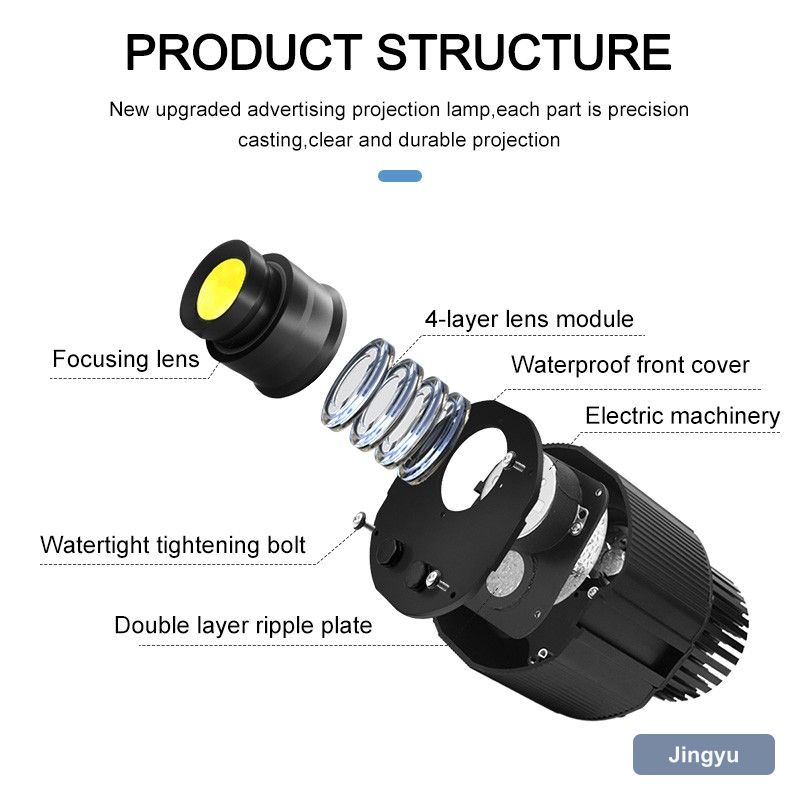
Price follows the thermal and environmental specification more than the marketing category. A party gobo light built for a nightclub will cost more than one for a private party room for reasons that are entirely justified — better seals, better heatsinking, better finish. The saving is real only if you never needed them.
- Output, which sets the LED, driver and heatsink size
- Ingress rating, which sets the sealing and housing design
- Lens quality, which sets how much output reaches the wall
- Finish and hardware, which set how it survives the site
Custom artwork and gobos
The artwork cost hides in the reorders. Engraving a glass gobo is not expensive per unit, but minimum quantities, shipping and the time spent re-approving artwork add up. Keep the original vector file, record the gobo reference, and every future reorder is a formality rather than a redesign.
The line that surprises people
The surprise lines are access and power. A party gobo light that needs a cherry picker, or a new switched spur run across a finished ceiling, can cost more to install than to buy. Both are visible in a ten-minute survey, which is why the survey is the cheapest part of the job.
Total cost of ownership
Total cost is dominated by whatever you have to do most often. If the party gobo light is easy to reach, cleaning is trivial and cheap; if it needs scaffolding, it gets deferred, output declines, and eventually somebody replaces a unit that only needed a wipe. Design for access and the running cost halves.
- Hardware, once
- Artwork reorders, every rebrand or new site
- Cleaning, twice a year
- Power, continuously
| Cost line | Frequency | What drives it |
|---|---|---|
| Hardware | Once | Output and ingress rating |
| Artwork | Every rebrand or new site | Number of sites and change frequency |
| Cleaning | Twice a year | Access method, mostly |
| Power | Continuously | Wattage and daily run hours |
Where to save and where not to
Save on image size, not on output. Halving the projected area doubles the contrast at the wall for nothing, and it lets a smaller party gobo light do the same job. Do not save on the ingress rating, the bracket, or the artwork file — those three cuts cost more than they save within two years.
- Reduce the image size before increasing the output
- Standardise the gobo size across every site
- Choose a surface with lower ambient light
- Keep the original vector artwork file