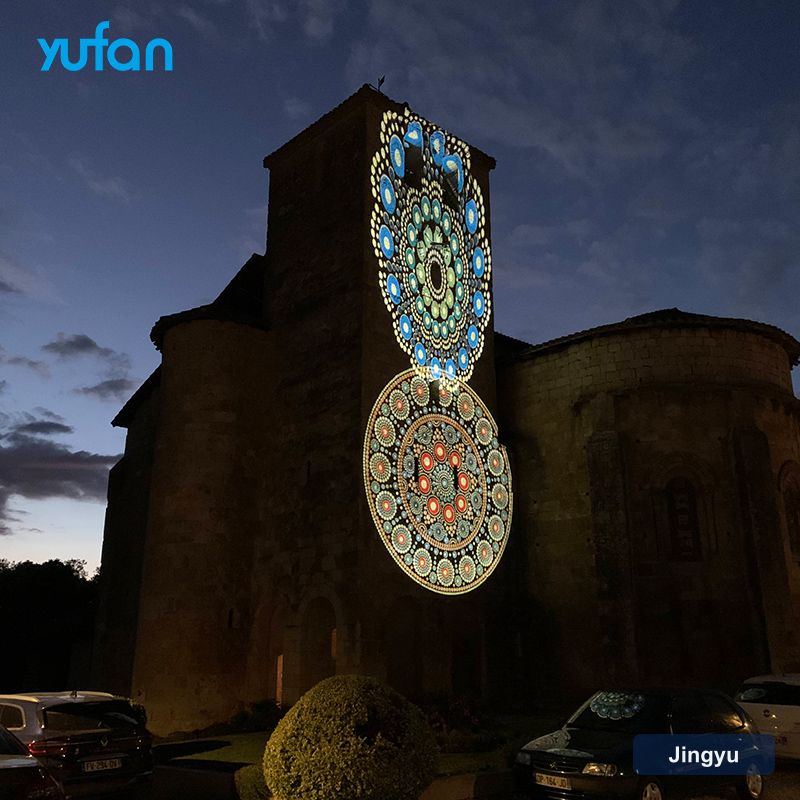
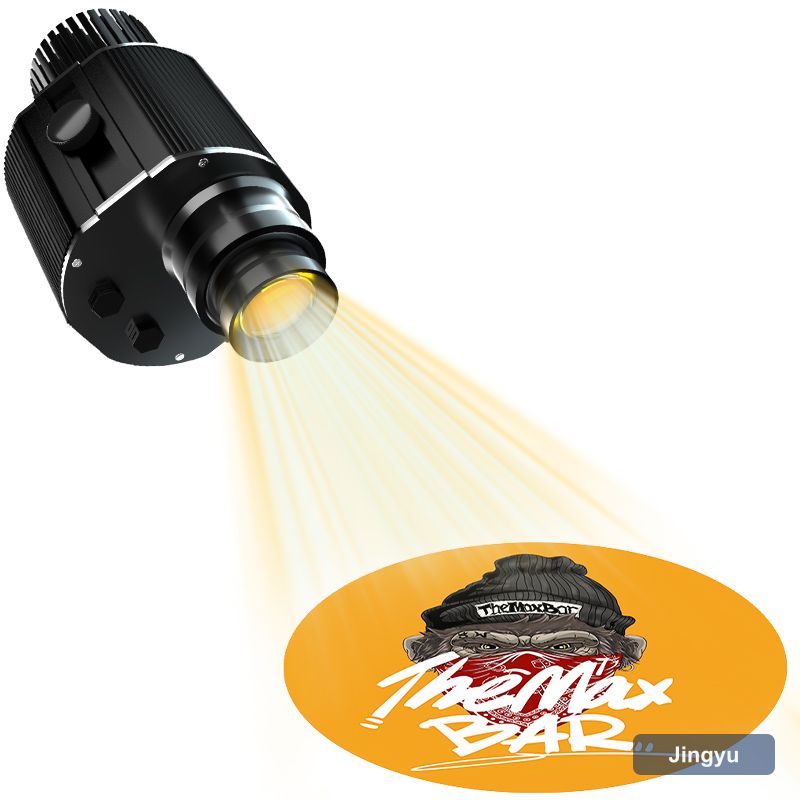
Compare at the same distance, on the same surface
The comparison that matters is not the one on the datasheet. Two options with similar wattage can differ entirely in what they can draw, how long they last, and what they cost to keep running. Put them side by side on the real surface and rank them on the things you will live with, not the things that look good in a table.
- Throw distance and image size, fixed for both options
- The surface and the ambient light at the working hour
- The artwork, and whether it contains text or fine detail
- How each option will be serviced
Light source and output
Compare output at the wall, not at the lamp. LED efficiency varies widely between bins and drivers, so an outdoor advertising logo projector quoting fewer lumens can deliver more lux through a better lens. If the supplier cannot give you a measured figure at a stated distance, treat the comparison as unreliable.
- Instant strike and tolerance of frequent switching
- Output stability over the duty cycle
- Driver quality and thermal design
- Measured output at the wall, not rated lumens
Image quality and artwork freedom
Image freedom is where the options separate most sharply. A gobo-based outdoor advertising logo projector can put any vector mark, script or halftone image on the wall; a beam-based alternative can only draw lines and abstract patterns. If the job is a logo, a monogram or anything with text, the comparison ends here.
- Can it render text and fine strokes
- Does it hold gradients or photographic halftones
- Gobo or pattern changeover time
- Maximum artwork resolution the optics can resolve
Running cost, heat and service life
Service life is a design outcome, not a datasheet number. Compare how each option handles heat, whether routine servicing breaks the environmental seal, and how quickly a replacement gobo can be produced. Those three things determine whether the unit is still doing its job in year three.
- Rated hours and what end of life means
- Cleaning frequency and access method
- Gobo or pattern replacement cost and lead time
- Power draw at the actual duty cycle
The short version
Ranked by what buyers actually complain about afterwards, the differences come down to artwork capability, servicing access and stability over time. Both options will produce light on a wall; only one will still be producing the right image on the right surface in two years.
Decide on the job, not the datasheet
The decision is usually obvious once the artwork is fixed. Text and brand marks need the outdoor advertising logo projector; washes and abstract movement do not. Where it stays genuinely close, buy the one that can be serviced from a ladder — that will be the difference you remember in year three.
- Does the job need text, a logo or fine detail
- Is the surface and ambient light controlled
- How often will the artwork change
- How will it be serviced in year three