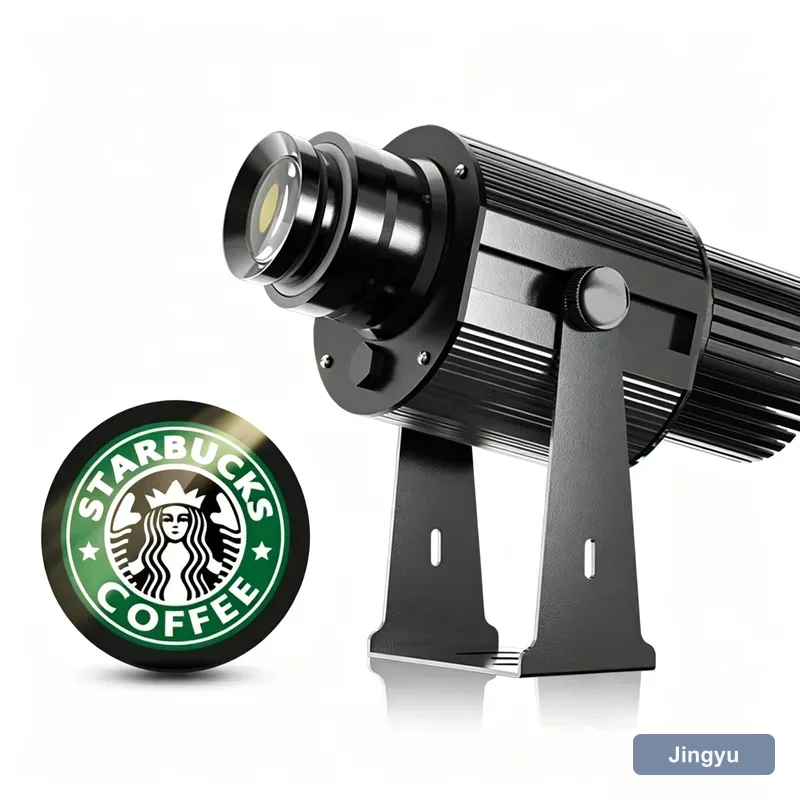
What's happening
A 2026 buyer guide clarifies that both IP65 and IP67 are fully dust-tight; IP65 resists water jets (awnings, facades, covered structures) while IP67 survives temporary immersion, making it the minimum for ground-mounted, poolside or flood-risk installs. It warns that cable glands and gaskets are the real failure point and that sealed high-wattage units need aluminium die-cast housing with active thermal management.
Why it matters for buyers
For a retailer, venue or signage buyer, the practical effect is simple: the unit that reads on your wall at your ambient light, with your artwork, beats the one with the bigger number on the box. Specification order — distance, image size, ambient, then brightness — decides the result.
It also changes lead-time risk. Custom gobos and certified outdoor builds need briefing before the date is fixed; the projector is rarely the long pole, the artwork and certification are.
The technical angle
Heat is the enemy of LED output. Outdoor housings that shed heat through finned aluminium hold their brightness curve far longer than sealed plastic boxes, which sag in output after the first season.
What to specify
Before you request a quote, lock these down:
- Throw distance from bracket to surface, measured on site — not estimated
- Ambient light level at the hour the projection must read
- Gobo material: glass for longevity and colour, metal for cheap short runs
- Ingress rating if it lives outdoors or gets washed down