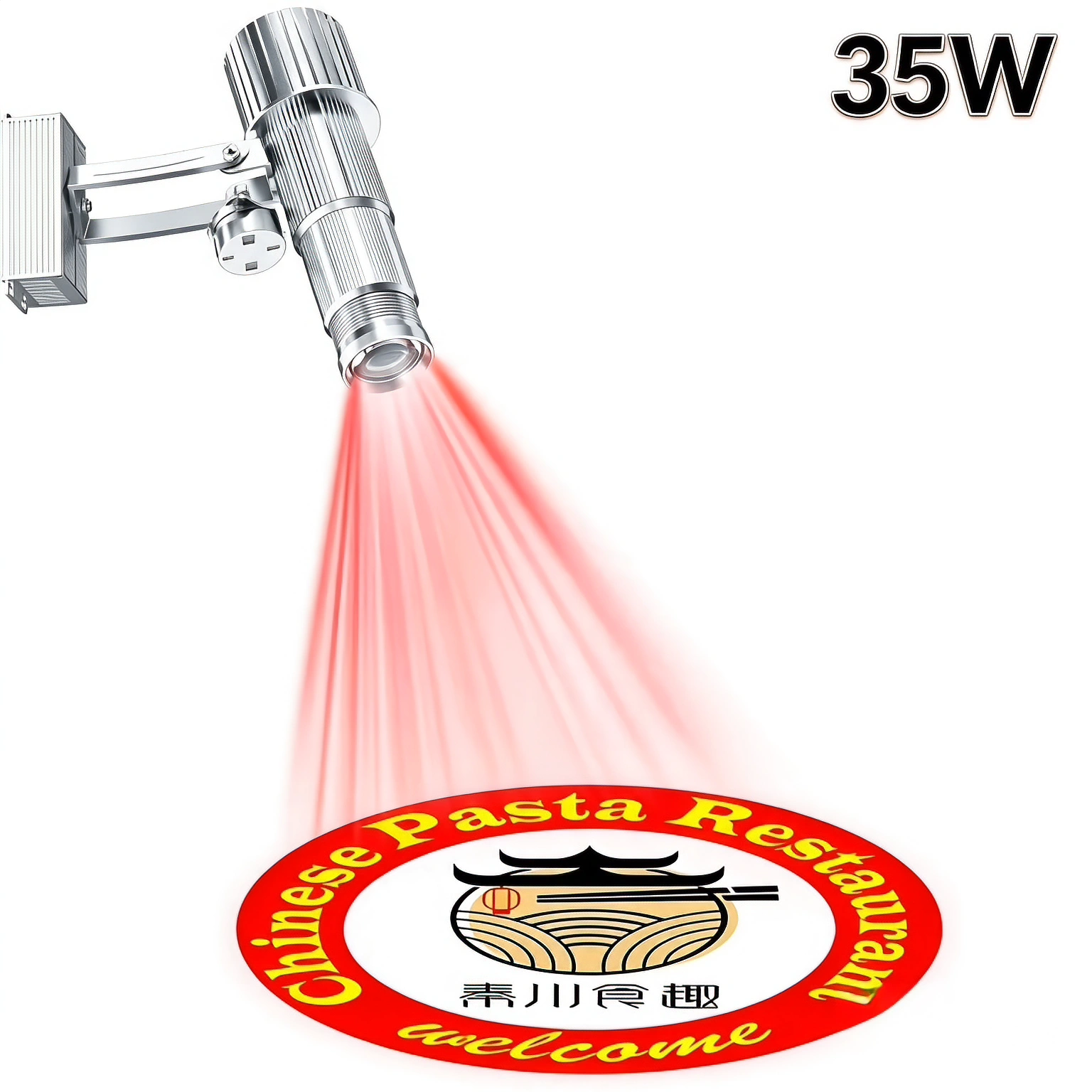
What's happening
Chinese industry coverage of 2026 rooftop and facade logo trends highlights a shift from flat signs to 3D structures plus dynamic light and shadow, with hidden beam lights and DMX512-controlled pixel strips. Energy governance is now built in via optical lenses and micro-prism light guides that constrain light to the visible angle and cut wasted up-light.
Why it matters for buyers
For a retailer, venue or signage buyer, the practical effect is simple: the unit that reads on your wall at your ambient light, with your artwork, beats the one with the bigger number on the box. Specification order — distance, image size, ambient, then brightness — decides the result.
It also changes lead-time risk. Custom gobos and certified outdoor builds need briefing before the date is fixed; the projector is rarely the long pole, the artwork and certification are.
The technical angle
A logo projection only looks sharp if the artwork arrives as a vector. Raster logos get re-cut at low resolution and the edges soften on the wall — the single most common 'why does ours look fuzzy' cause.
What to specify
Before you request a quote, lock these down:
- Lead time on a custom gobo versus a stock pattern
- Gobo material: glass for longevity and colour, metal for cheap short runs
- Mounting surface and whether the bracket can hold aim
- Image size you need at that distance