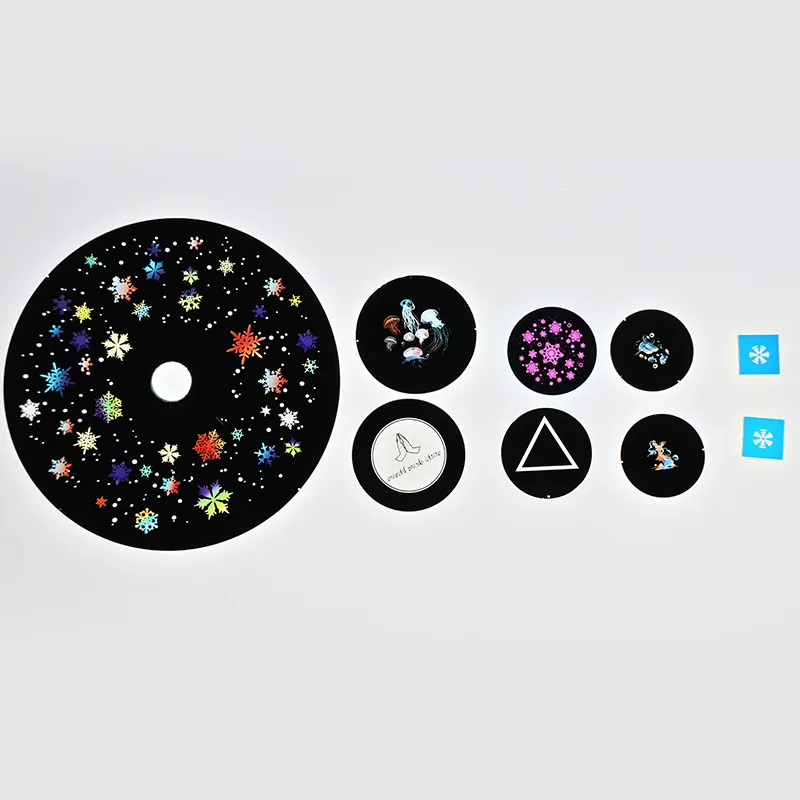
What's happening
BECEN explains glass gobos bond dichroic coatings onto transparent glass so the coating passes certain wavelengths and reflects others, yielding vivid photo-real projections. Because the colour is physically part of the glass structure it stays accurate and saturated after thousands of hours, provided the gobo stays within its rated temperature range — unlike a printed decal that burns under stage light.
Why it matters for buyers
For a retailer, venue or signage buyer, the practical effect is simple: the unit that reads on your wall at your ambient light, with your artwork, beats the one with the bigger number on the box. Specification order — distance, image size, ambient, then brightness — decides the result.
It also changes lead-time risk. Custom gobos and certified outdoor builds need briefing before the date is fixed; the projector is rarely the long pole, the artwork and certification are.
The technical angle
Colour filters cost output. Every added filter layer absorbs a slice of light; a three-colour stack can lose 40–60% of beam brightness. Quote the filtered lumen figure, not the bare lamp lumen, when comparing.
What to specify
Before you request a quote, lock these down:
- Certifications required for the market (CE / RoHS / FCC)
- Ambient light level at the hour the projection must read
- Throw distance from bracket to surface, measured on site — not estimated
- Mounting surface and whether the bracket can hold aim