Set the comparison on the same wall
Set the terms before comparing. For a metal gobo vs glass gobo, that means fixing the throw distance, the image size, the ambient light and the artwork — then asking which option meets all four. Any comparison that holds one of those variables loose will produce the wrong answer.
- Throw distance and image size, fixed for both options
- The surface and the ambient light at the working hour
- The artwork, and whether it contains text or fine detail
- How each option will be serviced
Where the brightness comes from
Where the brightness comes from determines what you can do with it. An LED metal gobo vs glass gobo can be switched, dimmed and cycled without penalty; older sources need warm-up and suffer from frequent switching. For anything on a timer or a sensor, LED is not just more efficient — it is the only sensible choice.
Image quality and artwork freedom
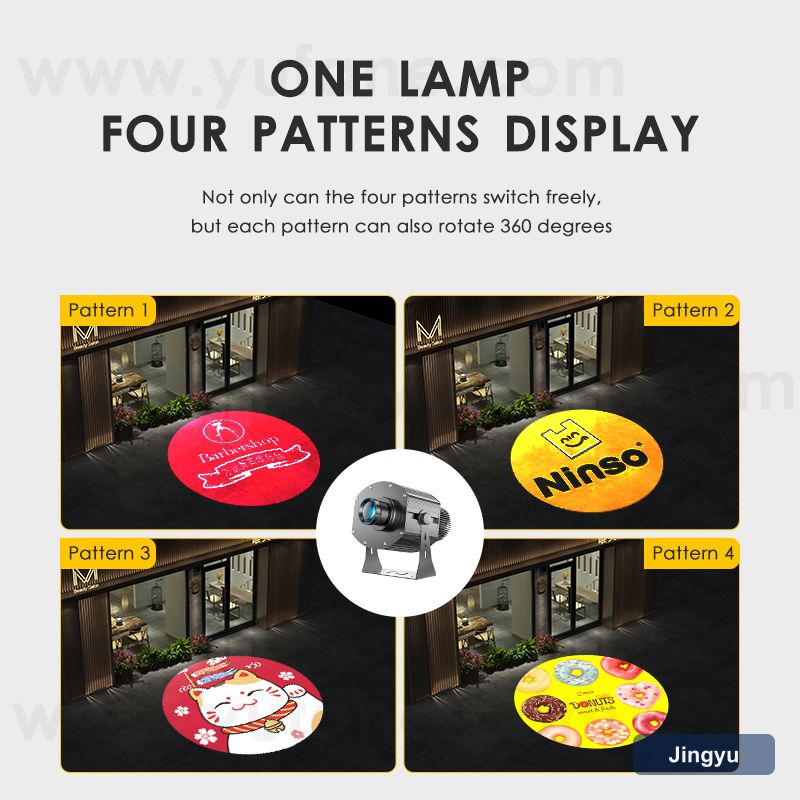
Detail is the constraint that decides most comparisons. A metal gobo vs glass gobo carrying a custom gobo will reproduce a script monogram cleanly; alternatives that generate the image electronically or mechanically cannot. Check the thinnest stroke in your artwork against what each system holds before you weigh anything else.
- Can it render text and fine strokes
- Does it hold gradients or photographic halftones
- Gobo or pattern changeover time
- Maximum artwork resolution the optics can resolve
The bill after the first year
Service life is a design outcome, not a datasheet number. Compare how each option handles heat, whether routine servicing breaks the environmental seal, and how quickly a replacement gobo can be produced. Those three things determine whether the unit is still doing its job in year three.
- Rated hours and what end of life means
- Cleaning frequency and access method
- Gobo or pattern replacement cost and lead time
- Power draw at the actual duty cycle
The short version
Set the two options side by side on the criteria that survive contact with a real site: what they can draw, what they cost to run, what they need to stay bright, and how they are serviced. The table is deliberately short — if a criterion does not change the decision, it does not belong in it.