Why throw distance changes everything
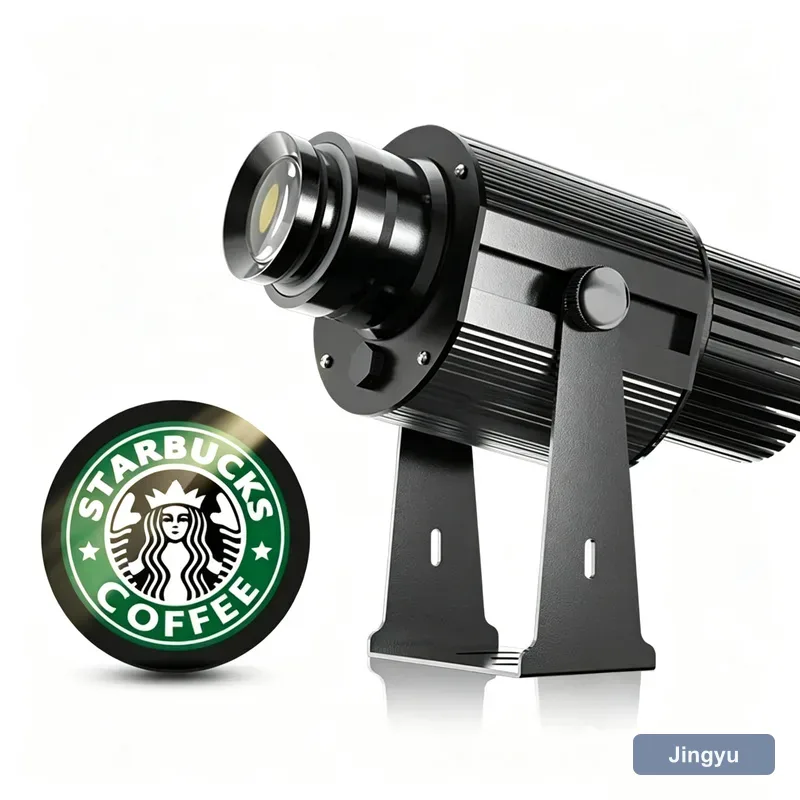
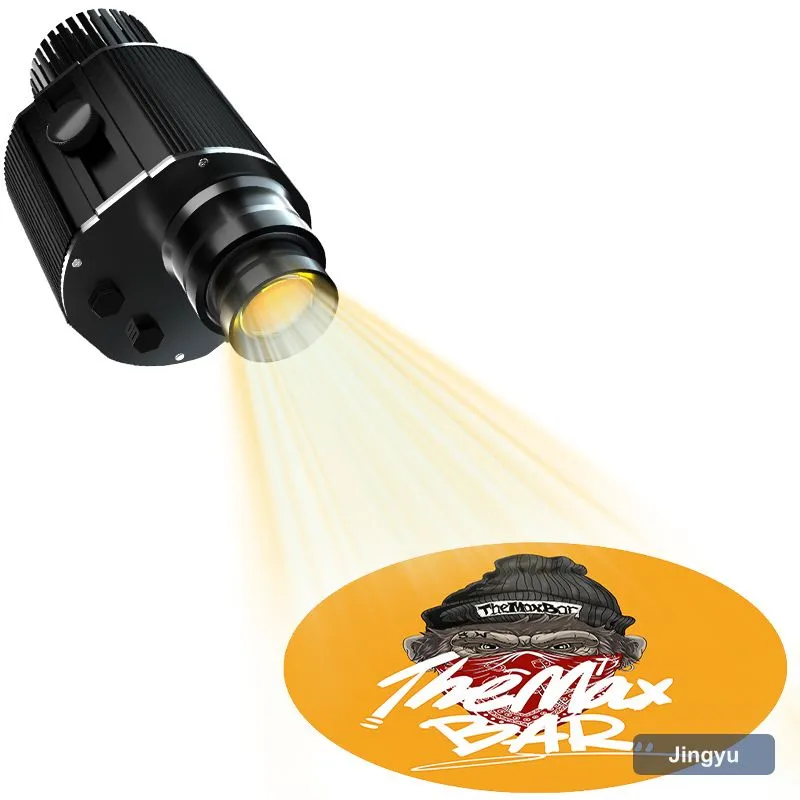
A gobo projector throws a fixed-size image determined by its lens and the distance to the surface. Move it twice as far and the image is four times larger but only one quarter as bright per square metre. At 150 m onto a stadium fascia, a 10,000-lumen indoor unit that looked punchy at 8 m will wash out completely.
Plan backwards from the wall: decide the logo diameter you need, then solve for lumens and lens rather than buying a bright box and hoping it reaches.
Lumens, lens and the inverse-square trap
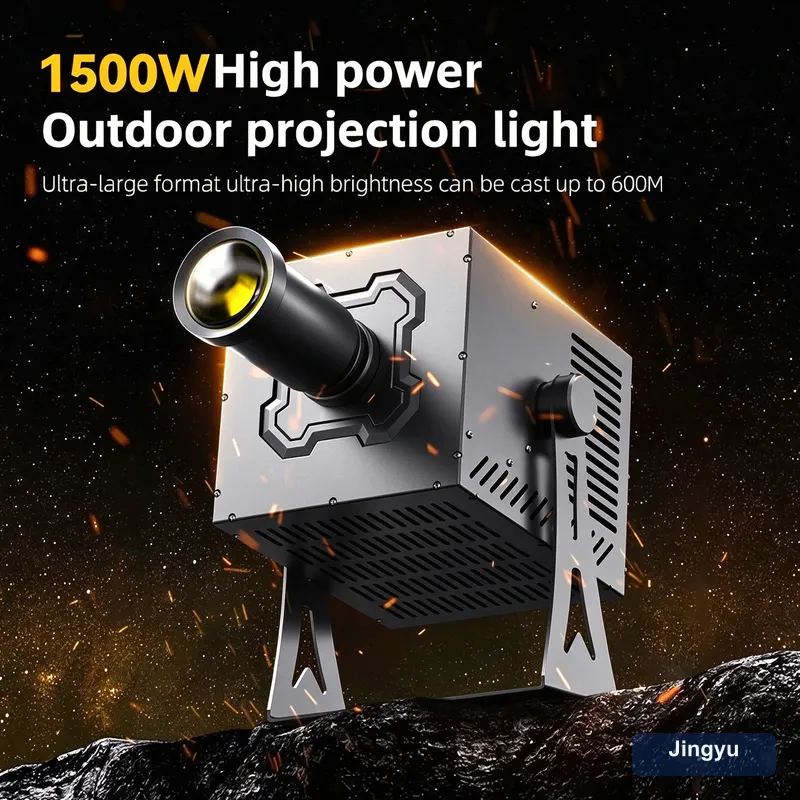
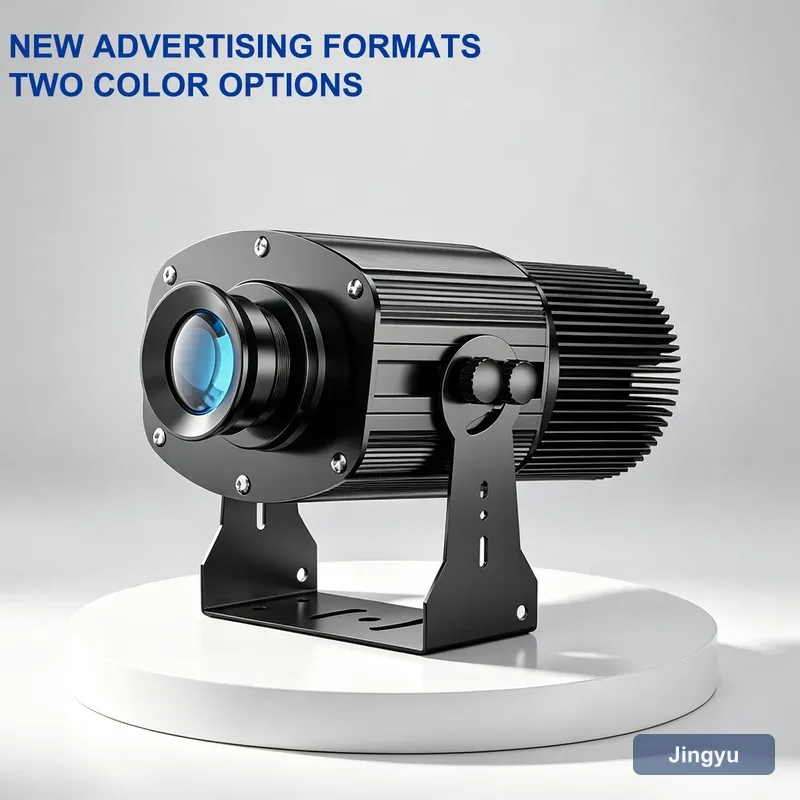
For facades beyond 50 m, look at projectors rated in the 200 W–600 W class with dedicated long-throw optics. A narrow beam spread concentrates flux instead of spilling it into the sky.
As a rule of thumb, every 30 m of extra throw at a given lens needs roughly double the output to hold the same on-wall brightness. Build in 30% headroom for haze, ambient city light and dirty lenses.
- 0–30 m: 100–200 W class, standard lens
- 30–80 m: 200–400 W class, medium-throw lens
- 80–200 m: 400–600 W+ class, long-throw / narrow beam lens
Mounting and bracket access
Long throws are almost always mounted high — rooftops, crane arms, adjacent buildings — to clear obstacles and reduce pedestrian glare. Confirm the bracket is rated for wind load and that you have safe access for gobo swaps and focus adjustment.
Aim for a near-perpendicular hit; a shallow angle stretches the logo vertically (keystone) and thins the light, so factor a tilt-correcting lens or a steeper mount.
Power and signal at distance
Running mains 150 m to a rooftop is a real cost. Use outdoor-rated cable in conduit, protect against surges, and keep the driver unit dry. If mains is impractical, a high-capacity rechargeable unit shortens runtime but avoids trenching.
Ambient light and contrast
A lit city facade fights your logo. Project onto matte, unlit sections; schedule the strongest playback after dusk; and prefer white or single-colour gobos (they read better at distance than fine RGB gradients).
Quick spec checklist
Use this before requesting a quote:
- Measure exact throw distance and desired logo height.
- Note wall material, colour and existing lighting.
- Confirm mount point, wind exposure and power access.
- Pick lens class from the distance bands above.
- Ask for an on-site brightness simulation, not just a lumen number.
| Throw | Typical power | Lens | Watch-out |
|---|---|---|---|
| 20–40 m | 100–200 W | Standard | Glare on passers-by |
| 40–80 m | 200–400 W | Medium | Keystone from low angle |
| 80–200 m | 400–600 W+ | Long / narrow | Power run & wind load |