Start from the wall and work backwards
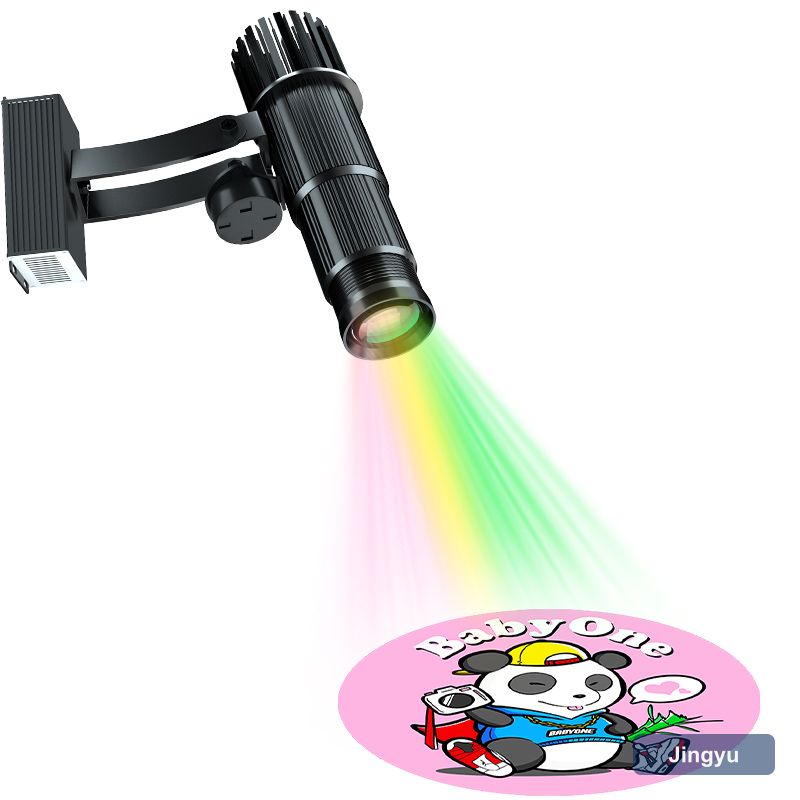
A datasheet is written to be read in the order the product was designed, which is rarely the order you need it. Read a logo projector light sheet backwards: start from the image you want on the wall, then the distance, then the optics, then the light source. The headline wattage is the last thing to look at and the first thing most people compare.
Lumens, watts and what reaches the wall
Wattage tells you the running cost, not the result. Two logo projector light models at the same wattage can differ by 30% at the wall because of lens efficiency and LED binning. What you actually care about is contrast: the image needs to be meaningfully brighter than the surface it lands on, and that is a lux comparison, not a lumen one.
| Figure | What it measures | How much to trust it |
|---|---|---|
| Lumens | Total light leaving the lamp | Rough sorting tool — ignores lens and gobo losses |
| Lux at the wall | Light arriving on the surface | The number that matters, rarely quoted |
| Watts | Power drawn from the supply | Tells you running cost, not brightness |
Throw distance and image size
The useful specification is the throw ratio, or failing that a distance-to-image-width table. On a typical logo projector light covering 3–20 m, the zoom lens might take the image from roughly 0.8 m wide at the near end to 3 m at the far end. Once you know the width you need, the throw tells you where the bracket goes — not the other way round.
The optical spec most sheets leave out
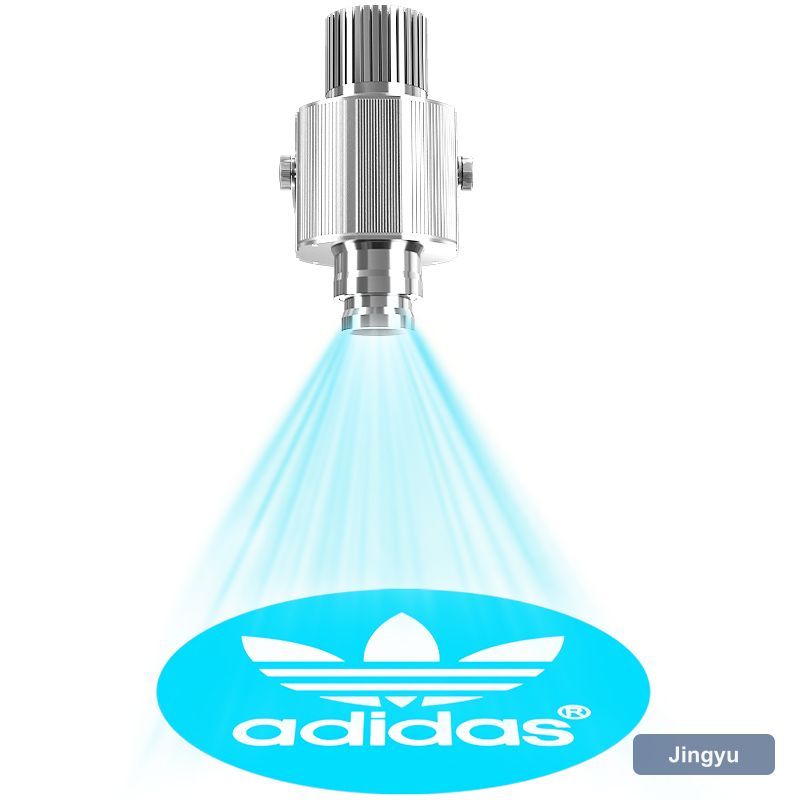
Gobo size is quoted as an outer diameter, but what matters is the image area — the part the light actually passes through. A 53 mm gobo may only have a 45 mm image circle, and artwork sized to the outer diameter gets cropped. For a logo projector light, ask for both figures before you commission artwork, because a file drawn for the wrong one is wasted.
IP rating and electrical data
The electrical block is boring and expensive to get wrong. Confirm the input voltage range matches your supply, check whether the logo projector light ships with a local plug, and look for CE, RoHS and FCC marks if the install is commercial. A unit that is electrically fine but uncertified will not pass a site inspection in most markets.
What a good supplier answers without hesitating
Ask for measured figures rather than calculated ones: image lux at a stated distance, image width at your throw, and the gobo image area. Then ask what happens when the unit needs servicing — whether the logo projector light can be opened on site without voiding the rating, and how quickly artwork can be re-cut if a branch changes its logo.