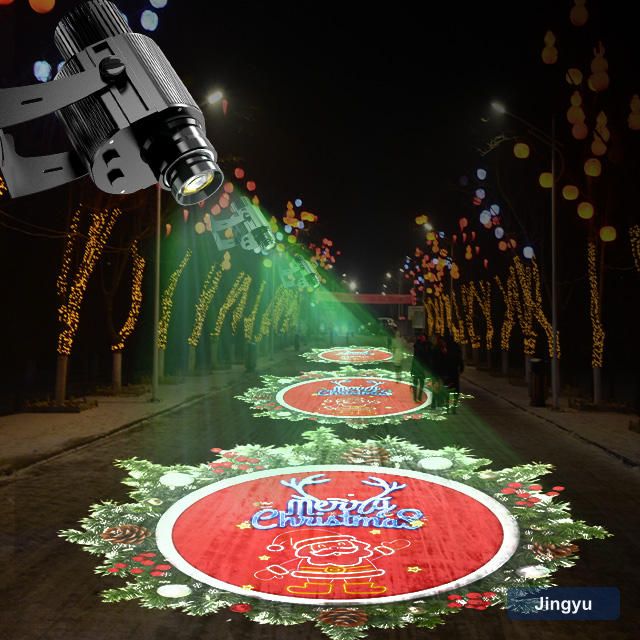
Read the sheet in the order it is installed
Most laser line level explained sheets list ten numbers and leave out the three that decide the result. Work from the wall backwards — image size, throw distance, ambient light — and treat everything else as supporting detail. The numbers that matter are the ones you can verify on site with a tape measure and a lux meter.
Output numbers, ranked by how much they lie
Treat the lumen figure as a rough sorting tool and nothing more. It ignores the lens, the gobo transmission and the colour filter, any of which can take a third of the output. For a laser line level explained in the 15–60 W class, ask instead for measured image lux at a stated distance — a supplier who has that number has actually tested the unit.
The optical spec most sheets leave out
Gobo size is quoted as an outer diameter, but what matters is the image area — the part the light actually passes through. A 53 mm gobo may only have a 45 mm image circle, and artwork sized to the outer diameter gets cropped. For a laser line level explained, ask for both figures before you commission artwork, because a file drawn for the wrong one is wasted.
The compliance block
Ratings age. A laser line level explained that left the factory rated IP54 can lose that rating the first time somebody opens it to change a gobo and reseats the gasket badly. Look for a design where routine access does not mean breaking the environmental seal, or accept that the rating applies to the unit as delivered, not as maintained.
Questions worth asking the supplier
Four questions separate a supplier who knows the product from one reading a sheet. What is the image width at my throw distance? What is the gobo image area? Is the IP54 rating for the housing alone or the whole assembly? And what is the lead time on a replacement gobo? A good supplier answers all four in one reply.