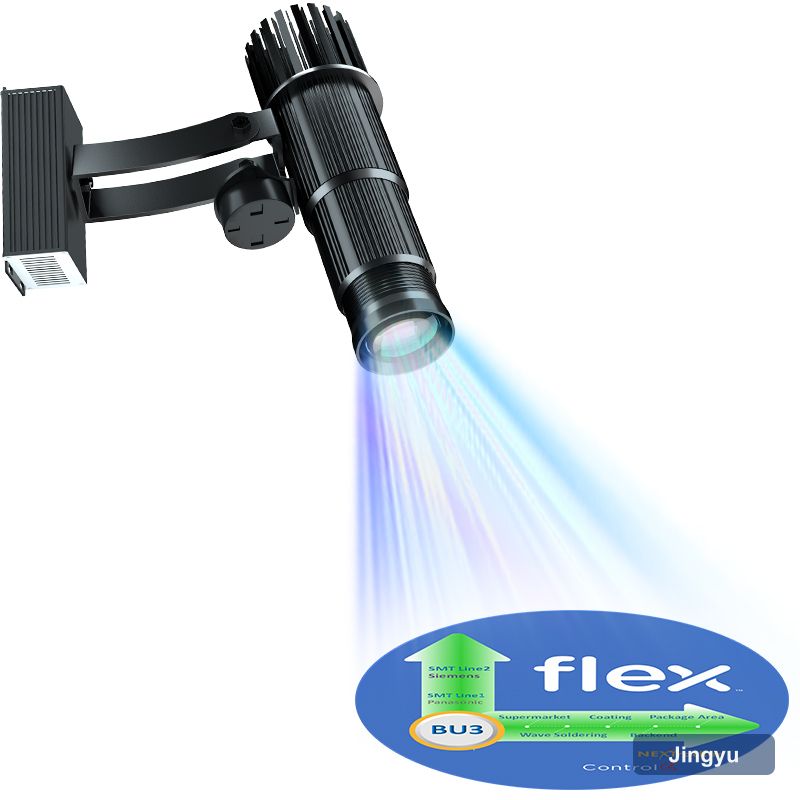
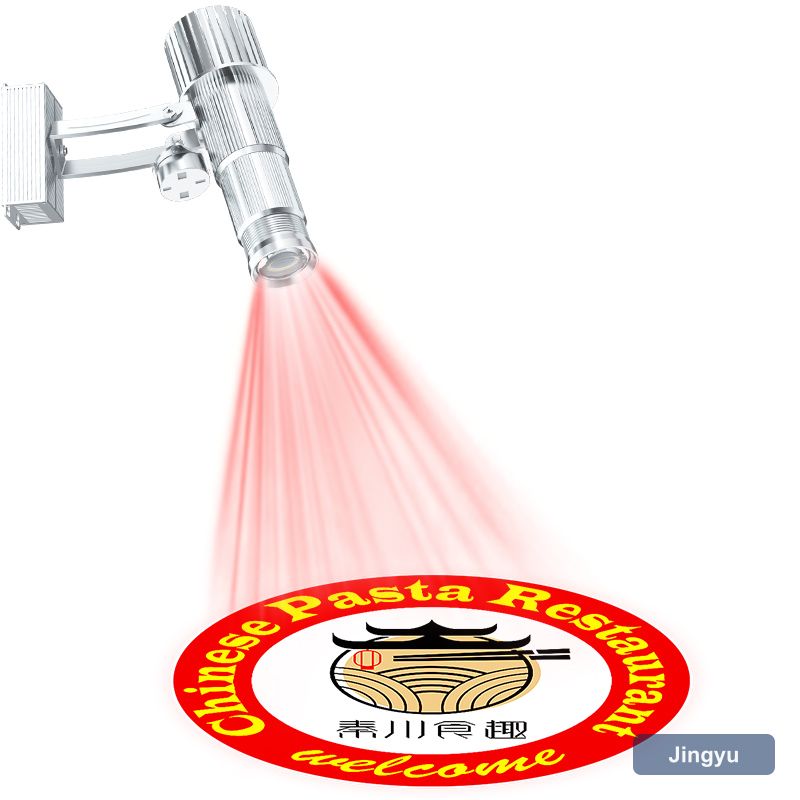
Start with the throw distance
Every static gobo projector decision starts from one measurement that most buyers skip: the distance between where the unit can be mounted and the surface it has to cover. Once you have that figure, the power bracket narrows from everything on the market to a handful of models, and the lens choice follows from it. Work it out with a tape, not from a floor plan, because ceiling voids, signage and light fittings move the real mounting point by a metre or more.
- Distance from the realistic mounting point to the centre of the target surface
- Image width you actually need, measured on the wall
- Whether the surface is flat, matte and square to the beam
- Any obstacle in the beam path — signage, foliage, display stands
Brightness is a question about the room, not the lamp
The wattage question is really an ambient light question. Daylight starts around 10,000 lux, a lit retail interior runs 300–500 lux, and a dim restaurant may sit under 100 lux. A static gobo projector has to beat whatever is already falling on that surface, which is why the same model can look brilliant in an entrance signage and invisible in a reception backdrop.
- Ambient light on the surface at the hour of use
- Surface reflectance — matte white gives the most back
- Image width, since halving the area doubles the brightness
- Whether the unit has to compete with daylight
Lens, zoom and focus
The optics decide what you can correct later. A fixed lens static gobo projector has to be positioned correctly the first time; a zoom lens lets you frame the image after the bracket is up. In practice that difference is worth more than an extra 20 W, because the most common install problem is not brightness — it is an image that lands slightly off the intended surface with no way to adjust it.
Gobo material: glass or metal
Choose the gobo from the artwork file. Solid block logos survive etching into stainless steel and will outlast the projector, but anything with hairlines, grey levels or a photographic element has to go on glass. This is the decision that most often gets made backwards — the buyer orders a cheap metal gobo, sees the result on the wall, and reorders in glass two weeks later.
Where it lives matters as much as what it does
Two things wear out before the electronics do: the gasket and the cable gland. Specify IP65 for a static gobo projector going outdoors, but also ask about the finish on the bracket and whether the gland is included in the rating. Salt air near a reception backdrop will find the cheapest component in the assembly within two seasons.
- Is the position exposed to driving rain or only wind-blown moisture
- Whether the cable gland is rated with the housing
- UV exposure on painted finishes and plastic parts
- Salt or pollutant load in the air
The five lines that get an accurate quote
Send five things with your enquiry and you will get a quote back the same day instead of a week of questions: the throw distance, the image width you need, a description of the surface, the ambient light at the hour of use, and the artwork file. With those, a supplier can pick the static gobo projector model and lens in one pass. Without them, everyone guesses.