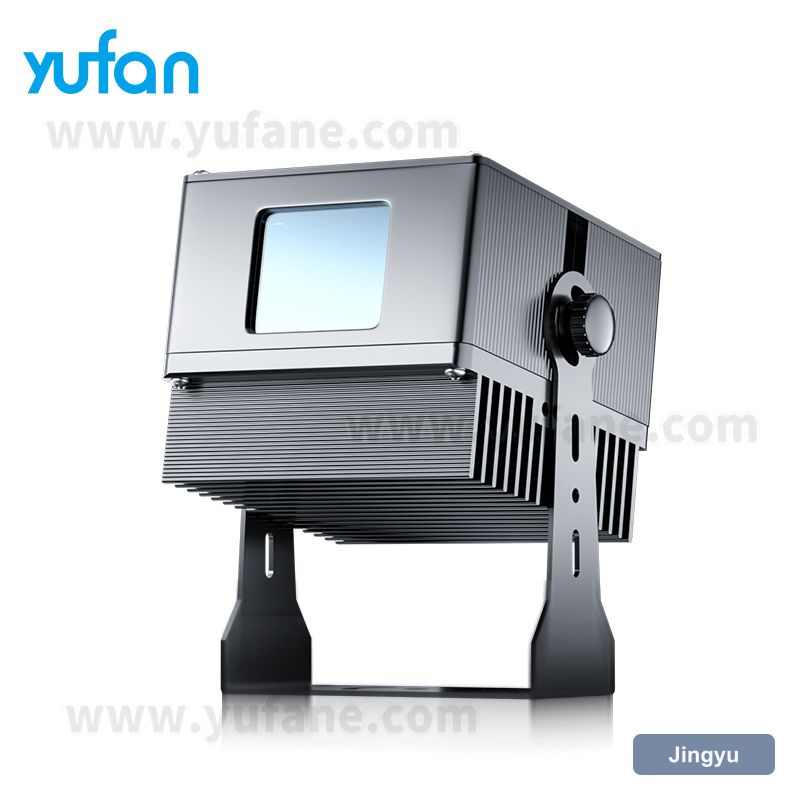
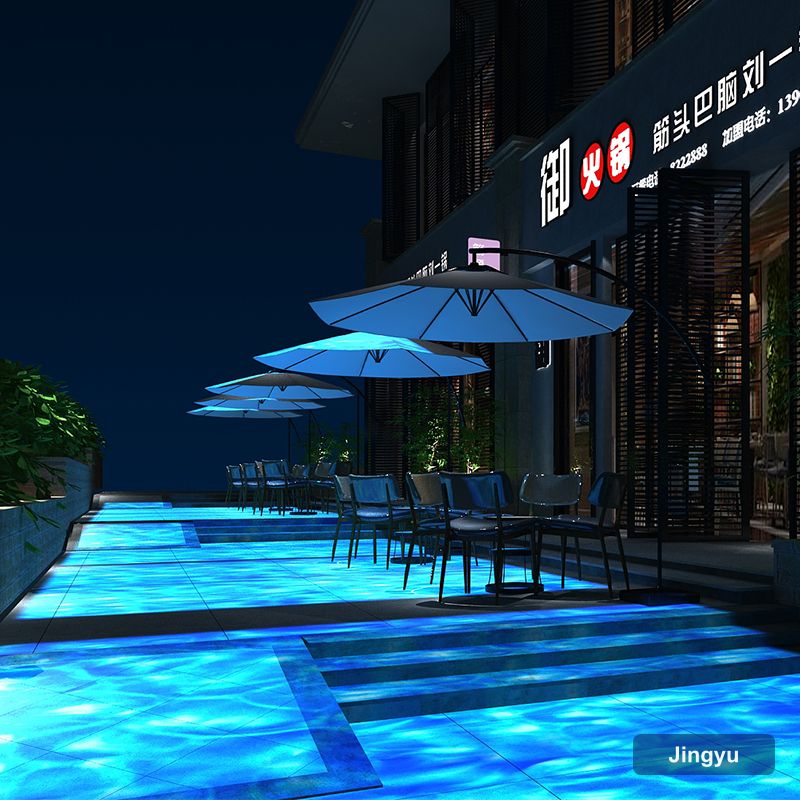
Start with the throw distance
Ask where the fixture will physically sit before asking what it should cost. On a restaurant logo projector the throw distance sets the lens, the lens sets the image size, and only then does wattage become a meaningful question. Buyers who start with the power figure usually end up with a unit that is either wasted on a short throw or hopeless on a long one.
- Throw distance from the mounting point the site will allow
- Required image width at that distance
- Surface material and colour
- Whether the beam can be square to the surface
Match output to the ambient light
Output is not a property of the lamp, it is a relationship between the lamp and the room. An indoor corridor sitting at 300 lux will swallow a 30 W image completely, while the same unit reads clearly in a 50 lux courtyard at dusk. Before you size a restaurant logo projector, find out how bright the target surface already is at the hour it will be used — that single measurement decides whether you need 20 W or 80 W.
Lens, zoom and focus
Zoom and focus are the two adjustments you will use ten times and the ones cheap units make hardest. A zoom range lets one restaurant logo projector cover several mounting positions, which matters when the final bracket location is decided on site rather than on paper. Look for a lens that holds focus across the zoom travel, because a unit that has to be re-focused every time you zoom is a unit that will be left slightly out of focus.
What your artwork forces you to buy
Your artwork decides the gobo material, not the other way round. A glass gobo handles fine strokes, gradients and photographic halftones that a metal stencil simply cannot hold, but it costs more and needs a little more care in handling. If the design is a solid single-colour mark with no fine detail, metal is cheaper and effectively unbreakable; if it has thin script or a gradient, glass is the only honest answer.
Where it lives matters as much as what it does
Match the rating to the site honestly. A restaurant logo projector mounted under a canopy needs far less protection than one on an open facade, and the price difference across ratings is real. What catches people out is the cable entry — a housing can be rated IP44 while the gland supplied with it is not, and that is where water actually gets in.
- Is the position exposed to driving rain or only wind-blown moisture
- Whether the cable gland is rated with the housing
- UV exposure on painted finishes and plastic parts
- Salt or pollutant load in the air
What to send when you ask for a quote
Before you send the enquiry, walk the site once with a tape measure and a phone camera. Throw distance, surface colour, the position of power, and a photo of the ambient light at the relevant hour will get you an accurate restaurant logo projector recommendation on the first reply — and they are all things you will need on install day anyway.
- Throw distance and mounting height
- Required image width
- Surface description and colour
- Ambient light at the hour of use
- Artwork file, vector if available