Start with the throw distance
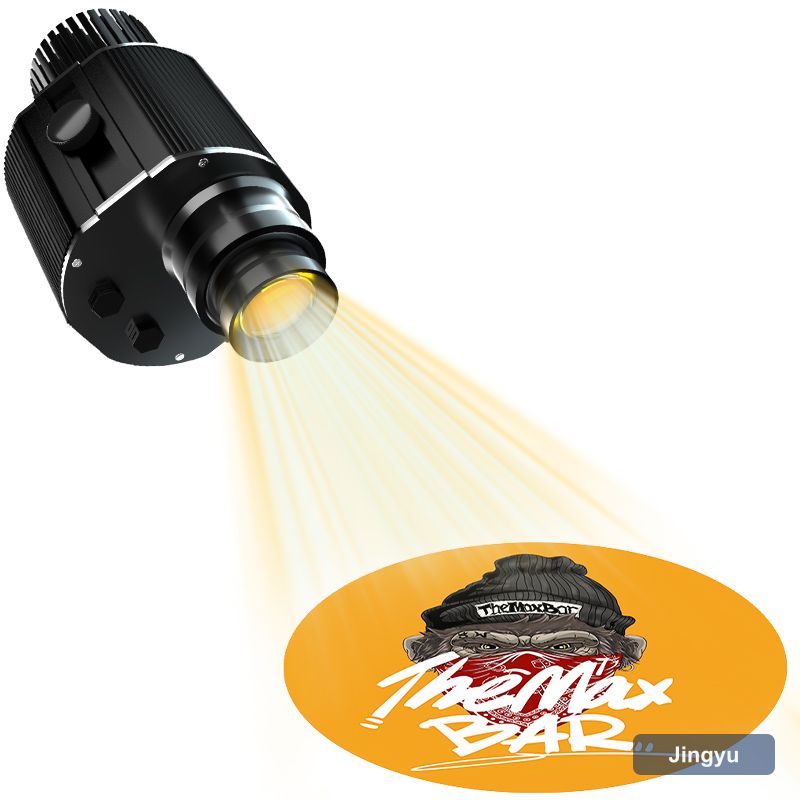
Ask where the fixture will physically sit before asking what it should cost. On a gobo projection light the throw distance sets the lens, the lens sets the image size, and only then does wattage become a meaningful question. Buyers who start with the power figure usually end up with a unit that is either wasted on a short throw or hopeless on a long one.
Brightness is a question about the room, not the lamp
Match the output to the darkest hour you care about, not the brightest. If the gobo projection light only has to work after sunset, 25 W may be generous; if it has to hold up against a shop window at 4pm, you are looking at the top of the 25–250 W range and still managing expectations. Overbuying power to solve an ambient light problem is the most expensive way to fix it.
Lens, zoom and focus
Zoom and focus are the two adjustments you will use ten times and the ones cheap units make hardest. A zoom range lets one gobo projection light cover several mounting positions, which matters when the final bracket location is decided on site rather than on paper. Look for a lens that holds focus across the zoom travel, because a unit that has to be re-focused every time you zoom is a unit that will be left slightly out of focus.
Gobo material: glass or metal
Your artwork decides the gobo material, not the other way round. A glass gobo handles fine strokes, gradients and photographic halftones that a metal stencil simply cannot hold, but it costs more and needs a little more care in handling. If the design is a solid single-colour mark with no fine detail, metal is cheaper and effectively unbreakable; if it has thin script or a gradient, glass is the only honest answer.
Ingress rating and mounting environment
The ingress rating is a statement about where the unit can live, not how good it is. IP65 on a gobo projection light means it will cope with the conditions it was tested for — driving rain, dust, or in the case of indoor ratings, nothing more than a wipe-down. If the install is under a soffit that only sees wind-blown rain, an indoor-rated unit may be fine; if it is exposed on a gallery, IP65 is the floor, not the target.
What to send when you ask for a quote
Send five things with your enquiry and you will get a quote back the same day instead of a week of questions: the throw distance, the image width you need, a description of the surface, the ambient light at the hour of use, and the artwork file. With those, a supplier can pick the gobo projection light model and lens in one pass. Without them, everyone guesses.