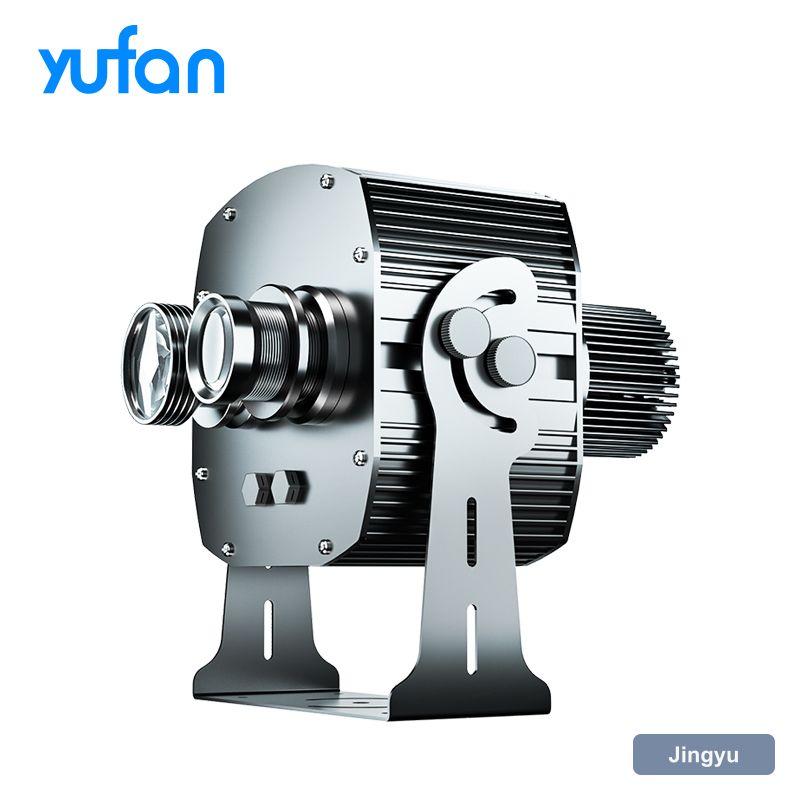
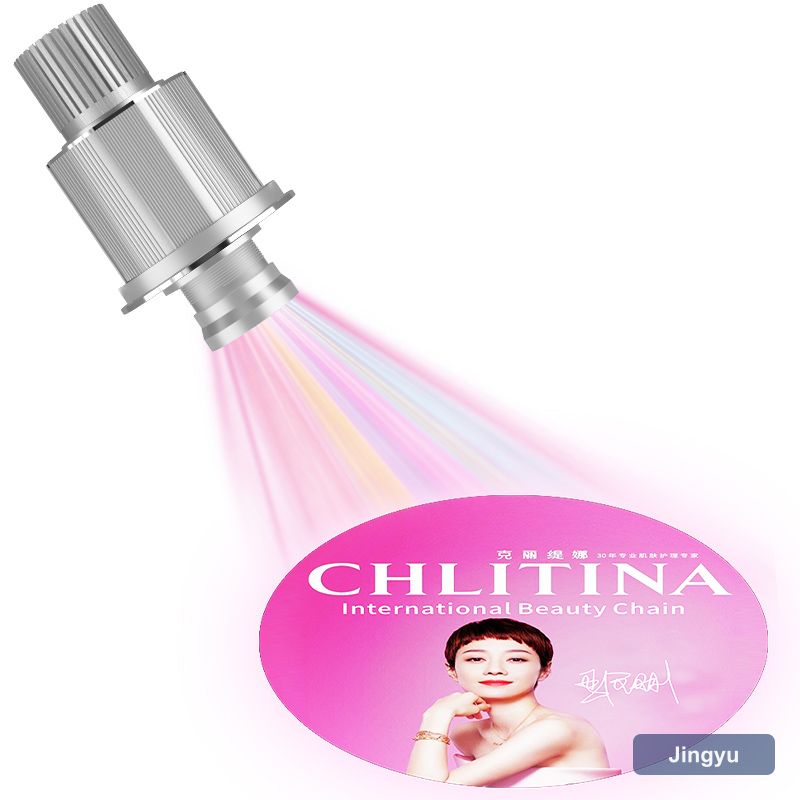
What this fixture is good at
Most buyers ask what a gobo light projector can do. The better question is what it does better than the alternatives: a printed sign, a neon, a screen. The answer is usually speed and reversibility — an image that can be changed in an afternoon by swapping a piece of glass, with no permit and no waste.
Application one — restaurant dining room
A restaurant dining room install is the reference case: controlled surface, predictable light, fixed message. A gobo light projector in this setting usually runs at the lower end of its output range, which extends LED life and keeps the housing cool — the two things that determine whether it is still running in five years.
Application two — cocktail bar
In a cocktail bar the competition is ambient light, and brute force is the expensive answer. Before moving from 20 W to 200 W, try relocation: a darker corner of the same wall, a surface angled away from the main fittings, or a slightly smaller image. Halving the image area doubles the brightness for free.
boutique shop: the demanding case
On a boutique shop, expect to give ground on image size to get contrast. A gobo light projector asked to cover a large area in difficult light will produce something technically correct and visually useless. Reduce the image width until it reads, accept the smaller footprint, and if that is not enough, the honest answer is that projection is the wrong tool here.
Recommended configuration by application
Configuration follows the venue more than the product. The same gobo light projector wants a narrow beam and high output on a long throw, a wide beam and modest output for a floor wash, and a locked focus anywhere it might be bumped. Decide these from the site, then order the lens to match.
| Application | Recommended output | Notes |
|---|---|---|
| restaurant dining room | 20 W class | Controlled surface, short throw |
| cocktail bar | 20–200 W | Competing with existing lighting |
| boutique shop | 200 W and up | Reduce image size before adding power |
What to check before committing
Three checks decide most applications: ambient light at the hour of use, the angle between the beam and the surface, and whether the image lands on something matte. A gobo light projector that fails any of these will not be rescued by a bigger lamp.