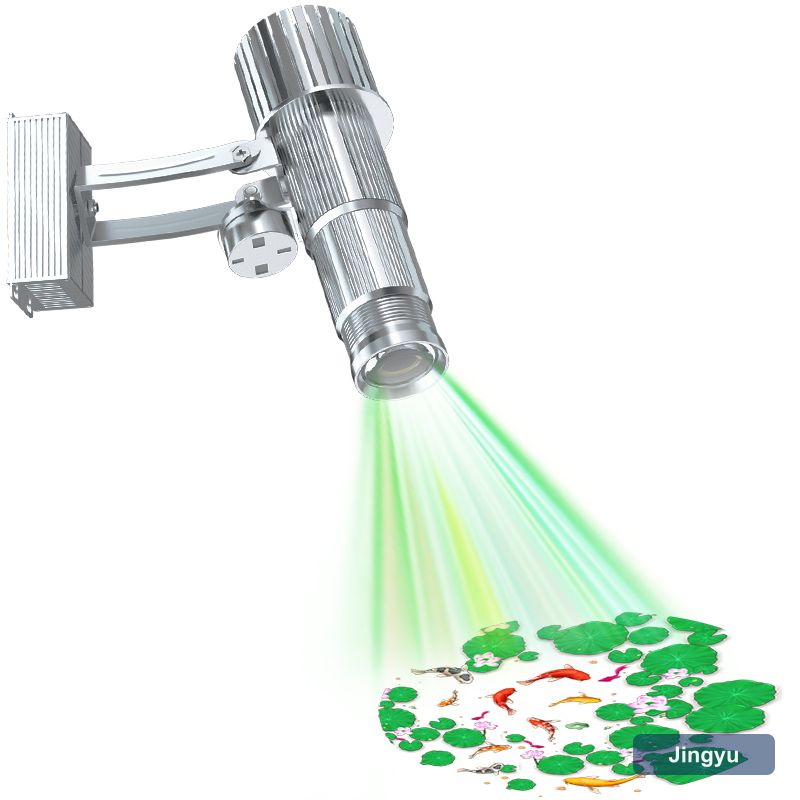
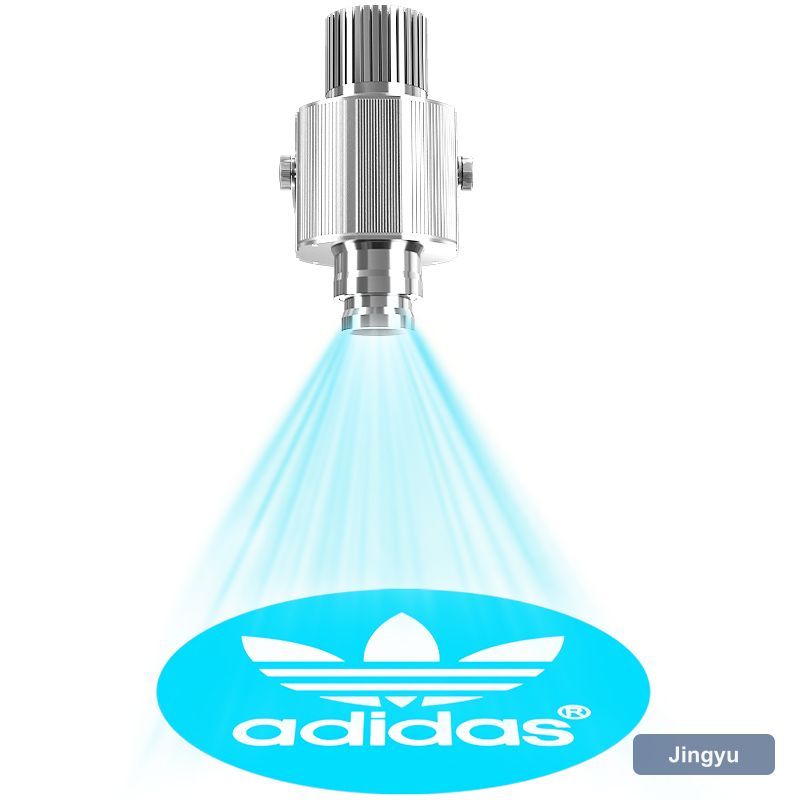
Read the sheet in the order it is installed
A datasheet is written to be read in the order the product was designed, which is rarely the order you need it. Read a custom logo projector sheet backwards: start from the image you want on the wall, then the distance, then the optics, then the light source. The headline wattage is the last thing to look at and the first thing most people compare.
Lumens, watts and what reaches the wall
Three output figures get mixed up constantly: lumens describe what the lamp produces, lux describes what arrives on the surface, and watts describe what you pay for. A custom logo projector drawing 20–200 W might deliver 3,000 lumens, but the lux at the wall depends entirely on how wide you spread it. The same lamp projecting a 1 m image is nine times brighter than the same lamp projecting a 3 m image.
| Figure | What it measures | How much to trust it |
|---|---|---|
| Lumens | Total light leaving the lamp | Rough sorting tool — ignores lens and gobo losses |
| Lux at the wall | Light arriving on the surface | The number that matters, rarely quoted |
| Watts | Power drawn from the supply | Tells you running cost, not brightness |
Throw distance and image size
Check whether the quoted throw is to a white wall in a dark room, because that is where the number comes from. On a custom logo projector intended for a chain store entrance, the realistic working distance is usually shorter than the maximum on the sheet, since contrast — not reach — is what fails first.
Gobo size, image area and resolution
Two numbers govern the image: gobo image area and the resolution the lens can carry. Glass gobos can be engraved far finer than any custom logo projector lens in this class will resolve, so the practical limit is optical. That is worth knowing before you pay for engraving detail nobody will see from 10 m away.
IP rating and electrical data
The electrical block is boring and expensive to get wrong. Confirm the input voltage range matches your supply, check whether the custom logo projector ships with a local plug, and look for CE, RoHS and FCC marks if the install is commercial. A unit that is electrically fine but uncertified will not pass a site inspection in most markets.
What a good supplier answers without hesitating
The most revealing question is about failure. Ask what the most common warranty claim on this custom logo projector is and how it is resolved. A supplier who answers honestly is worth more than one with a slightly better spec sheet.